
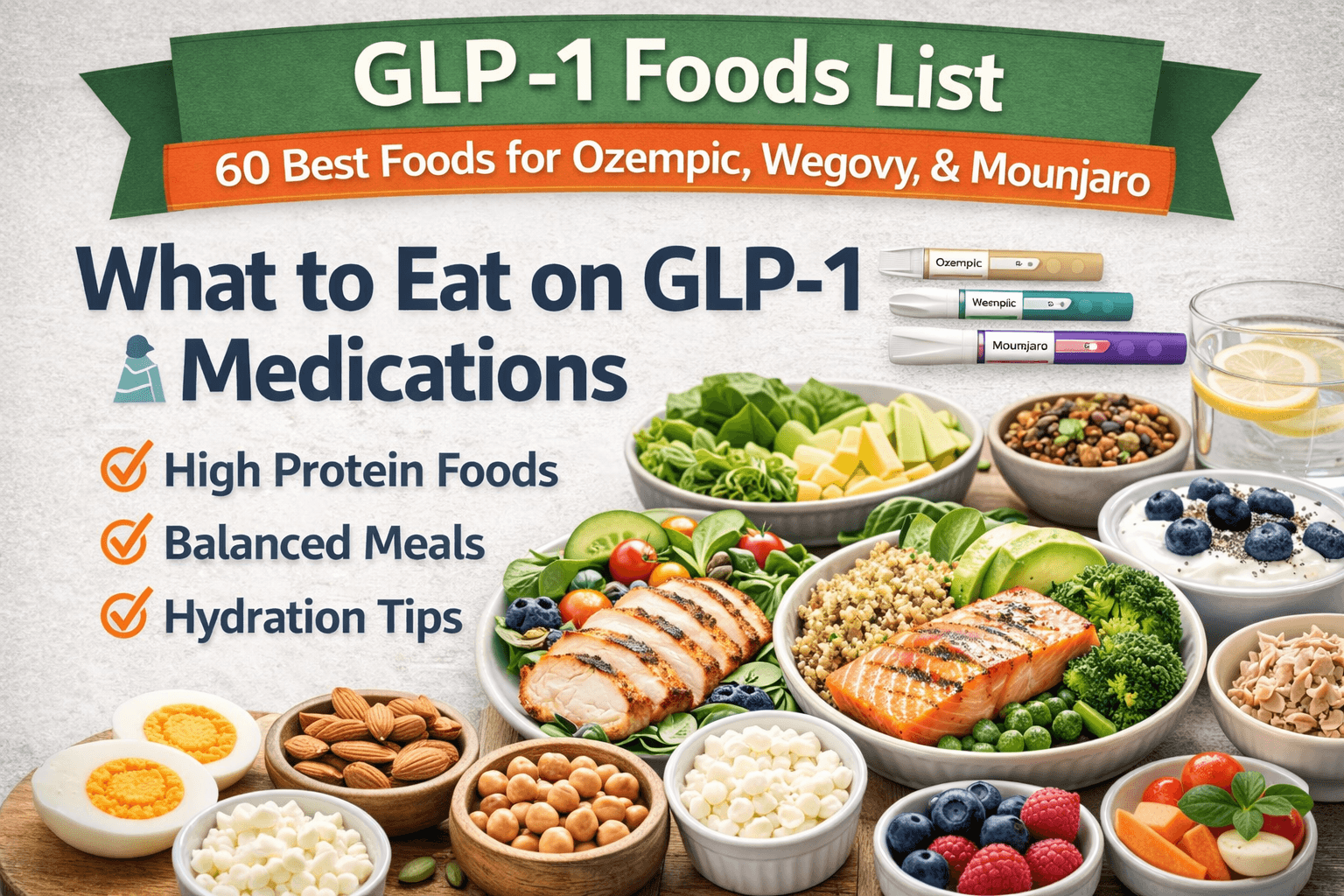
Why Food Choices Matter More on GLP-1 Medications
GLP-1 receptor agonist medications — including semaglutide (Ozempic, Wegovy) and tirzepatide (Mounjaro, Zepbound) — are highly effective at reducing appetite and supporting weight loss. But the way these medications change how you eat creates a specific nutritional challenge that most people do not anticipate.
When appetite drops significantly, total food intake falls. That is the intended effect. The problem is that eating less does not automatically mean eating better. Many people on GLP-1 medications unintentionally under-consume protein, fiber, and essential micronutrients. Over time, this can lead to fatigue, muscle loss, nutrient deficiencies, and a slower metabolism — the opposite of what these medications are designed to support.
The foods you choose on GLP-1 therapy are not a minor detail. They are a central part of how well the medication works and how you feel throughout treatment. Certain foods support energy, protect muscle, and ease common side effects. Others can worsen nausea, increase digestive discomfort, or accelerate muscle breakdown.
This article provides a structured list of the 60 best foods to eat on GLP-1 medications, along with the science behind each category, a sample day of eating, and practical guidance for building meals that work with your medication — not against it.
New to GLP-1 nutrition?
Understanding which foods work best with medications like Ozempic, Wegovy, and Mounjaro is only the first step. For a complete overview of how to structure meals, manage side effects, and build a sustainable nutrition strategy, see the GLP-1 Nutrition Guide.
👉 GLP-1 Nutrition Guide for Ozempic, Wegovy & Mounjaro Users
Related Article: Signs You’re Not Eating Enough on GLP-1 — learn the key warning signs of under-fueling while on GLP-1 therapy.
What GLP-1 Medications Do to Appetite and Digestion
GLP-1 (glucagon-like peptide-1) is a hormone naturally produced in the gut after eating. It signals fullness to the brain, stimulates insulin release, and slows the rate at which food moves from the stomach into the small intestine — a process called gastric emptying.
GLP-1 receptor agonist medications work by mimicking and amplifying this hormone. Semaglutide binds to GLP-1 receptors with a much longer half-life than the natural hormone, producing sustained appetite suppression and glucose regulation. Tirzepatide acts on both GLP-1 and GIP (glucose-dependent insulinotropic polypeptide) receptors, which adds an additional metabolic layer.
The key physiological effects relevant to nutrition include:
- Slower gastric emptying: Food stays in the stomach longer, extending fullness and reducing the urge to eat. This is beneficial for glucose control but can intensify nausea when the wrong foods are eaten.
- Reduced hunger hormones: GLP-1 medications suppress ghrelin — the hormone responsible for hunger signals — making it easier to go long periods without eating.
- Improved blood glucose control: By stimulating insulin and reducing glucagon, these medications flatten blood sugar spikes after meals, reducing energy crashes and sugar cravings.
These effects together produce a powerful reduction in total calorie intake. Research published through the National Institutes of Health has shown that GLP-1 receptor agonists can reduce daily calorie consumption by 20 to 30 percent or more. Without a structured nutrition approach, this level of reduction creates significant risk of protein deficiency and muscle loss.
Related Article: Why Am I So Tired on GLP-1 — understanding how fatigue develops and what nutritional factors are behind it.
The Most Important Nutrients on GLP-1 Medications
Protein
Protein is the single most important nutrient to prioritize on GLP-1 therapy. During significant calorie restriction, the body will use muscle tissue as an energy source if adequate protein is not available. This is called muscle protein catabolism, and it is accelerated during rapid weight loss.
Research consistently supports a protein intake of at least 1.2 to 1.6 grams per kilogram of body weight per day for adults during active weight loss. The Harvard T.H. Chan School of Public Health emphasizes that protein quality — complete amino acid profiles — matters as much as quantity. Animal proteins (meat, fish, dairy, eggs) are complete. Plant proteins are often incomplete but can be combined to meet needs.
On GLP-1 medications, where appetite is low and total food volume is reduced, every meal needs to prioritize protein above all else.
Fiber
Fiber slows digestion, supports gut health, and helps regulate blood sugar — all relevant concerns on GLP-1 therapy. Soluble fiber (found in oats, legumes, and fruits) forms a gel in the digestive tract that moderates glucose absorption. Insoluble fiber (found in vegetables and whole grains) supports regular bowel movements, which can be disrupted by slower gastric emptying.
The Mayo Clinic recommends 25 to 38 grams of daily fiber for adults. Most GLP-1 users fall well below this target. Gradual fiber increases with adequate hydration are important to avoid bloating and discomfort.
Electrolytes and Hydration
Nausea, vomiting, and reduced food and fluid intake can quickly deplete electrolytes — particularly sodium, potassium, and magnesium. Electrolyte imbalance is a common and underappreciated contributor to GLP-1-related fatigue, headaches, and muscle cramping.
Staying hydrated is also essential because thirst signals and hunger signals overlap. As GLP-1 medications suppress appetite, they can inadvertently reduce water intake as well.
Micronutrients
Reduced food intake means reduced micronutrient intake. Iron, B vitamins, zinc, calcium, and vitamin D are commonly deficient during GLP-1-related calorie restriction. Prioritizing nutrient-dense whole foods — rather than calorie-dense but nutrient-poor processed foods — is essential for meeting micronutrient needs in a smaller eating window.
The 60 Best Foods to Eat on GLP-1 Medications
1. High-Protein Foods (Foods #1–15)
Protein is the foundation of every GLP-1 meal. These foods deliver the highest protein density relative to calories, making them the most efficient choices when total food volume is low.
- 1. Chicken breast — One of the highest protein-to-calorie ratios available. Three ounces provides around 26 grams of protein. Easily digestible and adaptable to any meal format. Baked, poached, or shredded formats are better tolerated than fried preparations.
- 2. Eggs — Two large eggs provide approximately 12 grams of complete protein. Eggs are also rich in choline, B vitamins, and vitamin D. Soft-cooked or scrambled preparations are especially easy to digest.
- 3. Greek yogurt — Three-quarters of a cup delivers 15–20 grams of protein depending on the brand. Greek yogurt also provides probiotics and calcium. Choose plain, unsweetened varieties to avoid excess sugar.
- 4. Salmon — Three ounces provides approximately 22 grams of protein alongside omega-3 fatty acids, which have anti-inflammatory effects. Salmon is also a good source of vitamin D and B12.
- 5. Canned tuna — A convenient, high-protein option with approximately 20 grams per three-ounce serving. Low in fat, high in selenium and iodine. Choose varieties packed in water for lighter digestion.
- 6. Cottage cheese — Half a cup provides around 14 grams of slow-digesting casein protein, which supports overnight muscle preservation. High in calcium and easy to prepare.
- 7. Lean ground beef (90% or higher) — Provides 22 grams of protein per three ounces along with iron, zinc, and B12 — nutrients commonly depleted during calorie restriction. Choose lean cuts to reduce fat-related digestive slowdown.
- 8. Turkey breast — 25 grams of protein per three ounces with very low fat content. Ground turkey is a versatile and easy-to-digest lean protein source.
- 9. Shrimp — 20 grams of protein per three ounces with very few calories. Easy to prepare and digest. A strong option when appetite is low.
- 10. Tofu (firm) — Half a cup provides approximately 10 grams of complete plant-based protein. Tofu is also a good source of calcium and iron. Best prepared with soft textures for GLP-1 digestion.
- 11. Tempeh — Three ounces provides around 16 grams of protein. Tempeh is fermented, which may support gut microbiome health. It has a denser texture than tofu and pairs well with vegetables.
- 12. Edamame — Half a cup of shelled edamame delivers about 9 grams of complete protein along with fiber and folate. A convenient snack or meal addition.
- 13. Sardines — Three ounces provide 21 grams of protein plus one of the richest dietary sources of omega-3 fatty acids and vitamin D. Sardines are also high in calcium when consumed with bones.
- 14. Skyr (Icelandic yogurt) — Similar to Greek yogurt but often higher in protein — up to 22 grams per cup. Very thick texture and mild flavor. Well tolerated when appetite is reduced.
- 15. Low-fat ricotta cheese — Half a cup provides approximately 14 grams of protein with a soft, easy-to-eat texture. Rich in calcium and can be used in both savory and sweet preparations.
Related Article: Prevent Muscle Loss During Weight Loss — the complete guide to maintaining lean mass while losing fat on GLP-1 therapy.
2. Fiber-Rich Foods (Foods #16–30)
Fiber supports digestion, slows glucose absorption, and promotes sustained satiety — all important on GLP-1 therapy where digestion is already slowed. The following foods provide the best fiber-to-calorie ratios and are generally well tolerated.
- 16. Broccoli — One cup provides approximately 5 grams of fiber along with vitamins C, K, and folate. Steam or roast for easier digestion.
- 17. Lentils — Half a cup of cooked lentils provides 8 grams of fiber and 9 grams of plant protein. One of the best dual-purpose foods for GLP-1 users. High in iron and folate.
- 18. Black beans — Half a cup provides 7.5 grams of fiber and 7 grams of protein. Extremely nutrient-dense and filling in small portions.
- 19. Chia seeds — Two tablespoons provide 10 grams of fiber. Chia seeds absorb water and form a gel that slows digestion — supportive of glucose stability and gut comfort.
- 20. Oats — Half a cup of rolled oats provides 4 grams of fiber, primarily beta-glucan, which has well-established evidence for cholesterol reduction and blood sugar support.
- 21. Spinach — Two cups raw provides 1.5 grams of fiber plus iron, magnesium, and folate. Low calorie and easy to incorporate into eggs, smoothies, or salads.
- 22. Brussels sprouts — One cup provides 4 grams of fiber and is high in vitamin C and K. Roasted versions are easier to digest than boiled.
- 23. Berries (blueberries, raspberries, strawberries) — Half a cup of raspberries provides 4 grams of fiber with minimal sugar. Also high in antioxidants. Easily added to yogurt or eaten as a small snack.
- 24. Apples — A medium apple with skin provides 4.4 grams of fiber including pectin, a soluble fiber that supports gut health.
- 25. Peas — Half a cup provides 4 grams of fiber and 4 grams of protein. Easy to add to soups, rice dishes, or as a standalone side.
- 26. Sweet potato — One medium sweet potato provides 4 grams of fiber along with beta-carotene and potassium. A well-tolerated, nutrient-dense carbohydrate source.
- 27. Zucchini — One cup provides 1 gram of fiber in a very low-calorie package. Easy to digest, mild in flavor, and highly hydrating.
- 28. Cabbage — One cup shredded raw provides 2 grams of fiber and is rich in vitamin C and K. Cooked cabbage is particularly easy on digestion.
- 29. Chickpeas — Half a cup provides 6 grams of fiber and 7 grams of protein. Versatile in soups, salads, or puréed into hummus.
- 30. Flaxseeds (ground) — Two tablespoons provide 4 grams of fiber and omega-3 fatty acids. Ground flaxseed is better absorbed than whole and mixes well into yogurt or oatmeal.
3. Hydrating Foods (Foods #31–42)
Hydration is one of the most overlooked nutritional needs on GLP-1 therapy. These foods contribute meaningfully to fluid and electrolyte intake, which matters especially when reduced appetite also reduces water consumption.
- 31. Bone broth — Rich in sodium, potassium, and small amounts of protein. Warm and easy to tolerate when solid food is not appealing. One of the best options for managing nausea days.
- 32. Vegetable broth — A low-calorie fluid source high in sodium and potassium. Can be sipped between meals to maintain hydration.
- 33. Cucumber — 95 percent water by weight. A cup of sliced cucumber provides hydration with minimal calories and a small amount of vitamin K.
- 34. Celery — Another high-water vegetable (approximately 95% water) with natural sodium. Easy to pair with protein-rich dips.
- 35. Watermelon — 92 percent water. Also provides lycopene, vitamin C, and a small amount of potassium. A refreshing option in warm weather.
- 36. Plain Greek yogurt (as a hydrator) — Contains a meaningful water content alongside protein. Contributes to fluid intake while providing nutritional value.
- 37. Oranges — High water content with natural electrolytes including potassium and a small amount of calcium. Also rich in vitamin C.
- 38. Tomatoes — High water content and rich in lycopene and potassium. Easy to include in soups or eaten raw.
- 39. Bell peppers — Over 90 percent water and extremely high in vitamin C. Low calorie and easy to digest raw or lightly cooked.
- 40. Coconut water (unsweetened) — A natural source of potassium and electrolytes. Best consumed in moderation due to natural sugar content.
- 41. Low-sodium chicken soup — Combines hydration, protein, and warmth. One of the most commonly tolerated foods on high-nausea days.
- 42. Herbal teas (ginger, peppermint) — Caffeine-free fluid sources. Ginger and peppermint both have evidence-based support for reducing nausea.
4. Easy-to-Digest Foods for Nausea Management (Foods #43–52)
Nausea is the most commonly reported GLP-1 side effect, particularly when starting or increasing the dose. These foods are gentle on the stomach, easy to digest, and are often the only foods comfortably tolerated on difficult days.
- 43. Bananas — Soft, easy to digest, and rich in potassium. One of the best choices when nausea limits food options. Also provides quick energy without causing blood sugar spikes.
- 44. Plain white rice — Bland, easy to digest, and well tolerated. Low in fiber, which makes it gentler on the stomach than whole grains on high-nausea days.
- 45. Plain oatmeal — Warm, mild, and easily digestible. A small portion provides carbohydrates and beta-glucan fiber without overwhelming the digestive system.
- 46. Plain toast (white or sourdough) — One of the most commonly recommended foods for nausea. Light and easy on the stomach. Can be paired with a small amount of nut butter for added protein.
- 47. Soft-cooked eggs — Scrambled, poached, or soft-boiled eggs provide complete protein with minimal digestive demand. A reliable protein source on nausea days.
- 48. Applesauce (unsweetened) — Soft, easy to digest, and a good source of pectin. Gentle on the stomach and useful when chewing solid food is uncomfortable.
- 49. Ginger tea or ginger chews — Ginger has well-documented antiemetic properties. The Cleveland Clinic and multiple clinical reviews support ginger as a safe, effective option for reducing nausea.
- 50. Saltine crackers or plain crackers — Classic nausea management foods. Light on the stomach and useful for calming nausea between meals.
- 51. Plain boiled potato — Soft, easily digestible, and a good source of potassium. Cold potatoes also contain resistant starch, which feeds beneficial gut bacteria.
- 52. Peppermint tea — Peppermint may help relax stomach muscles and reduce nausea. A caffeine-free option that supports fluid intake.
5. Additional Nutrient-Dense Supporting Foods (Foods #53–60)
These foods do not fit neatly into a single category but provide specific nutritional benefits that address common deficiencies in GLP-1 users.
- 53. Avocado — Rich in potassium (more than bananas), magnesium, and healthy monounsaturated fats. A quarter of an avocado adds significant nutritional value without overwhelming fullness.
- 54. Almonds — A small handful provides protein, magnesium, vitamin E, and healthy fats. An efficient snack when appetite is limited.
- 55. Pumpkin seeds — High in magnesium and zinc — both commonly depleted on calorie restriction. Two tablespoons are sufficient to contribute meaningfully.
- 56. Leafy greens (kale, arugula, Swiss chard) — Rich in calcium, iron, magnesium, and vitamin K. Highly nutrient-dense per calorie — critical when total food intake is low.
- 57. Quinoa — A complete plant-based protein with 8 grams per cup cooked, plus 5 grams of fiber. One of the most nutritionally complete carbohydrate sources available.
- 58. Low-fat milk or fortified plant milk — Provides calcium, vitamin D, and protein in an easy-to-consume liquid format. Useful when solid food intake is low.
- 59. Olive oil (small amounts) — Provides anti-inflammatory oleocanthal compounds and supports fat-soluble vitamin absorption. Use small amounts to avoid slowing digestion.
- 60. Dark chocolate (85% or higher, in small amounts) — Provides magnesium, iron, and antioxidants with minimal sugar. A small portion satisfies cravings without worsening nausea or glucose levels.
Foods That May Worsen GLP-1 Side Effects
Just as certain foods support GLP-1 therapy, others can significantly worsen common side effects. Understanding which foods to limit — and why — is as important as knowing what to eat.
Very Fatty or Greasy Meals
GLP-1 medications already slow gastric emptying. High-fat meals — fried foods, heavy sauces, large amounts of butter or oil — slow emptying even further. This creates a combination that frequently triggers intense nausea, bloating, and discomfort. Lower-fat preparations of protein sources (grilled, baked, poached) are better tolerated.
Ultra-Processed Foods
Chips, packaged snack foods, fast food, and highly processed convenience items are low in protein and fiber but high in sodium, refined carbohydrates, and unhealthy fats. When total calorie intake is limited, filling that space with nutrient-poor processed foods accelerates micronutrient deficiency and reduces the protective benefits of a structured nutrition approach.
Large Portions
Even healthy foods cause discomfort when eaten in large amounts on GLP-1 therapy. Overeating relative to reduced stomach capacity causes nausea, vomiting, and upper abdominal pressure. Smaller, structured meals eaten every three to four hours are far better tolerated than two or three large meals.
Alcohol
Alcohol interacts with GLP-1 medications in several ways. It can worsen nausea and digestive discomfort, contribute to dehydration, impair blood sugar regulation, and add significant empty calories with no nutritional value. The Mayo Clinic recommends discussing alcohol use with your healthcare provider when using GLP-1 medications.
High-Sugar Snacks and Beverages
Sugary foods cause rapid blood glucose spikes followed by crashes, which can worsen fatigue and increase cravings. Although GLP-1 medications improve glucose control, high-sugar intake still creates metabolic stress and can disrupt the stable energy levels these medications are designed to support.
Sample GLP-1 Day of Eating
The following is an example structured day of eating designed to meet protein needs, support hydration, and minimize GLP-1 side effects. Portions are intentionally small and protein-forward.
Breakfast
- 2 soft-scrambled eggs (~12g protein)
- 3/4 cup plain Greek yogurt (~17g protein)
- 1/2 cup blueberries (antioxidants, fiber)
- 1 cup ginger or peppermint tea (hydration, nausea support)
Approximate protein: 29 grams
Mid-Morning Snack (if tolerated)
- 1/2 cup cottage cheese (~14g protein)
- Sliced cucumber (hydration)
Approximate protein: 14 grams
Lunch
- 3 oz grilled chicken breast (~26g protein)
- 1 cup steamed broccoli (fiber, vitamins C and K)
- 1/2 cup cooked quinoa (~4g protein, complete amino acids)
- Small drizzle of olive oil (healthy fats, absorption support)
Approximate protein: 30 grams
Afternoon Snack (if tolerated)
- 1 small handful almonds (magnesium, healthy fats)
- 1 medium apple (fiber, hydration)
Approximate protein: 6 grams
Dinner
- 3 oz baked salmon (~22g protein, omega-3s)
- 1 cup spinach sautéed in a small amount of olive oil (iron, magnesium)
- 1/2 cup lentils (fiber, plant protein)
- 1 cup low-sodium broth or herbal tea (hydration, electrolytes)
Approximate protein: 28 grams
Total approximate daily protein: 107 grams. This is a reasonable starting target for most adults on GLP-1 therapy. Individual needs will vary based on body weight, muscle mass goals, and activity level. A registered dietitian can help calibrate your personal protein target.
Related Article: GLP-1 Diet Plan — a complete structured meal planning guide built specifically for GLP-1 medication users.
Best High-Protein Foods for GLP-1 Weight Loss
Use this reference table to identify the highest-protein foods and their specific benefits for GLP-1 users.
| Food (Serving Size) | Protein Per Serving | Key Benefits for GLP-1 Users |
| Chicken Breast (3 oz) | 26g | Lean, versatile, easy to portion |
| Greek Yogurt (3/4 cup) | 17g | High protein, probiotic support |
| Eggs (2 large) | 12g | Easy to digest, nutrient-dense |
| Salmon (3 oz) | 22g | Omega-3s, anti-inflammatory |
| Cottage Cheese (1/2 cup) | 14g | Slow-digesting casein protein |
| Tuna (3 oz, canned) | 20g | High protein, low calorie |
| Lean Ground Beef (3 oz) | 22g | Iron, zinc, B12 |
| Tofu (1/2 cup) | 10g | Plant-based, complete amino acids |
| Tempeh (3 oz) | 16g | Fermented, probiotic benefit |
| Edamame (1/2 cup) | 9g | Fiber + protein combination |
| Shrimp (3 oz) | 20g | Very low calorie, high protein |
| Turkey Breast (3 oz) | 25g | Lean, easy to prep |
The Ideal GLP-1 Plate
The following visual breakdown represents the recommended proportions for a balanced GLP-1 meal. These are not rigid rules — they are practical targets designed to maximize nutritional quality when total food volume is limited.
INFOGRAPHIC: The Ideal GLP-1 Plate
| PROTEIN (40%) Chicken, fish, eggs, Greek yogurt, cottage cheese, tofu. Aim for 25–35g per meal. Protein preserves muscle, supports satiety, and stabilizes blood sugar. | FIBER-RICH VEGETABLES (30%) Broccoli, zucchini, spinach, bell peppers, cucumber. Non-starchy vegetables add bulk, support digestion, and provide essential micronutrients with minimal calories. | HEALTHY FATS (15%) Avocado, olive oil, nuts, seeds. Small portions support nutrient absorption and sustained energy. Avoid large amounts of saturated fat, which can slow digestion. | HYDRATING FOODS (15%) Broth-based soups, fruits, yogurt, leafy greens. Contribute to daily fluid intake, support electrolyte balance, and are easy to tolerate when appetite is reduced. |
Common GLP-1 Nutrition Mistakes
These six mistakes are the most frequently observed nutritional errors among GLP-1 medication users. Awareness of these patterns is the first step toward avoiding them.
INFOGRAPHIC: Common GLP-1 Nutrition Mistakes
| Eating Too Little | Extremely reduced intake causes muscle loss and nutrient deficiencies. GLP-1 suppresses appetite — intentional structure is needed to meet protein goals. |
| Low Protein Intake | When calories drop without protein focus, the body breaks down muscle for energy. This slows metabolism and makes long-term weight maintenance harder. |
| Dehydration | GLP-1 reduces hunger signals that often overlap with thirst cues. Many users underestimate fluid needs, worsening fatigue, headaches, and constipation. |
| Skipping Meals Entirely | Skipping meals feels easy on GLP-1 but compounds nutrient gaps. Structured small meals throughout the day protect muscle and maintain energy. |
| High-Fat, Heavy Meals | Fatty meals slow gastric emptying further, worsening nausea and fullness. Smaller, lower-fat meals are better tolerated and easier to digest. |
| Relying on Processed Foods | Low volume intake makes food quality critical. Ultra-processed snacks crowd out protein, fiber, and micronutrients needed for metabolic health. |
The Fueled Framework GLP-1 Nutrition System
Understanding which foods to eat is valuable. Having a structured system to organize those foods into consistent, protein-forward meals is what creates results that last.
The Fueled Framework is a metabolic nutrition system built specifically for adults using GLP-1 medications. It organizes nutrition around five core principles:
- 1. Protein Protection Rule: Every meal must include a minimum protein target — typically 25 to 35 grams — to protect muscle tissue during active weight loss. Protein is never optional. It is the first macro planned, not the last.
- 2. Daily Protein Distribution: Total daily protein is distributed evenly across three to four eating occasions. Consuming protein in smaller, regular portions supports muscle protein synthesis more effectively than one or two large protein-heavy meals.
- 3. GLP-1 Meal Structure: Meals are structured to be small, nutrient-dense, and well tolerated given the digestive slowdown of GLP-1 therapy. Emphasis is placed on soft textures, lower fat preparations, and avoiding foods that exacerbate nausea.
- 4. Side-Effect Support Foods: Specific foods are incorporated strategically to manage common GLP-1 side effects — ginger and peppermint for nausea, potassium-rich foods for fatigue, magnesium-containing foods for muscle cramps, and fiber-containing foods for constipation.
- 5. 7-Day Reset Strategy: A structured seven-day framework that recalibrates nutrition after a difficult week — whether caused by nausea, under-eating, medication dose increases, or travel disruption. Designed to restore protein intake, hydration, and consistent eating patterns efficiently.
The full Fueled Framework GLP-1 Quick Start Protocol brings all five principles together into a practical, day-by-day nutrition guide. It includes structured meal plans, protein tracking tools, a side-effect management guide, and shopping lists designed for real-world implementation.
Related Resource: Fueled Framework GLP-1 Quick Start Protocol — the complete structured nutrition system for GLP-1 medication users.
Frequently Asked Questions
What foods should you avoid on Ozempic?
The foods most likely to worsen side effects on Ozempic include very fatty or greasy meals, ultra-processed foods, large portions, alcohol, and high-sugar snacks or beverages. These foods slow digestion further, increase nausea, and reduce the nutritional quality of an already limited intake. Prioritize lean proteins, cooked vegetables, small portions, and easily digestible carbohydrates instead.
Can you eat normally on GLP-1 medications?
Most people cannot eat the same volume of food they did before starting GLP-1 therapy. Appetite and fullness signals change significantly. What becomes important is not the volume of food but the quality and structure. Smaller, more frequent meals high in protein and fiber support metabolic health better than attempting to eat the same meals in smaller portions. The goal is intentional structure, not willpower-based restriction.
How much protein should you eat on GLP-1?
Most research supports a target of at least 1.2 to 1.6 grams of protein per kilogram of body weight per day during active weight loss. For a 75-kilogram (165-pound) adult, that equals approximately 90 to 120 grams of protein daily. Given reduced appetite on GLP-1 therapy, achieving this requires deliberate planning — prioritizing protein at every meal rather than treating it as an afterthought.
Why does GLP-1 cause fatigue?
Fatigue on GLP-1 medications is usually caused by a combination of factors: inadequate protein intake leading to muscle breakdown, electrolyte imbalance from reduced food and fluid intake, and general calorie restriction. In some cases, fatigue also relates to blood sugar adjustments in the early weeks of treatment. Structured protein intake, adequate hydration, and electrolyte support resolve most GLP-1-related fatigue within a few weeks.
What are the best snacks on GLP-1 medications?
The best snacks on GLP-1 therapy are small, protein-rich, and easy to digest. Options include cottage cheese with cucumber, a small handful of almonds, a hard-boiled egg, plain Greek yogurt, or edamame. On nausea days, bland snacks like plain crackers, bananas, or ginger tea are better tolerated. Snacks are optional — eat them only when genuinely hungry, not out of habit.
Does food choice affect GLP-1 medication effectiveness?
Yes. While GLP-1 medications work regardless of diet, food choices determine whether the weight lost is predominantly fat or a combination of fat and muscle. High protein intake protects lean mass during weight loss. Poor nutritional quality — low protein, low fiber, high processed food intake — increases the risk of muscle loss, fatigue, nutrient deficiency, and metabolic slowdown. Food choice does not override the medication, but it significantly determines the quality of results.
Summary and Key Takeaways
GLP-1 medications are a powerful tool for weight loss and metabolic health. But the dramatic reduction in appetite they produce creates a specific set of nutritional challenges that require deliberate management.
The 60 foods in this guide are organized to address those challenges directly: high-protein foods protect muscle tissue, fiber-rich foods support digestion and satiety, hydrating foods maintain fluid and electrolyte balance, and easy-to-digest foods reduce nausea-related disruption.
The most important principle across all of them is this: when you eat less, every bite counts more. The quality, structure, and protein density of your meals becomes far more consequential on GLP-1 therapy than it is in typical eating patterns.
The Fueled Framework GLP-1 Quick Start Protocol provides a complete, structured implementation of these principles — with meal plans, tracking tools, and day-by-day guidance designed for real GLP-1 users navigating real challenges.
Next Step: Explore the Fueled Framework GLP-1 Quick Start Protocol for a complete structured nutrition guide built around the foods and principles in this article.