
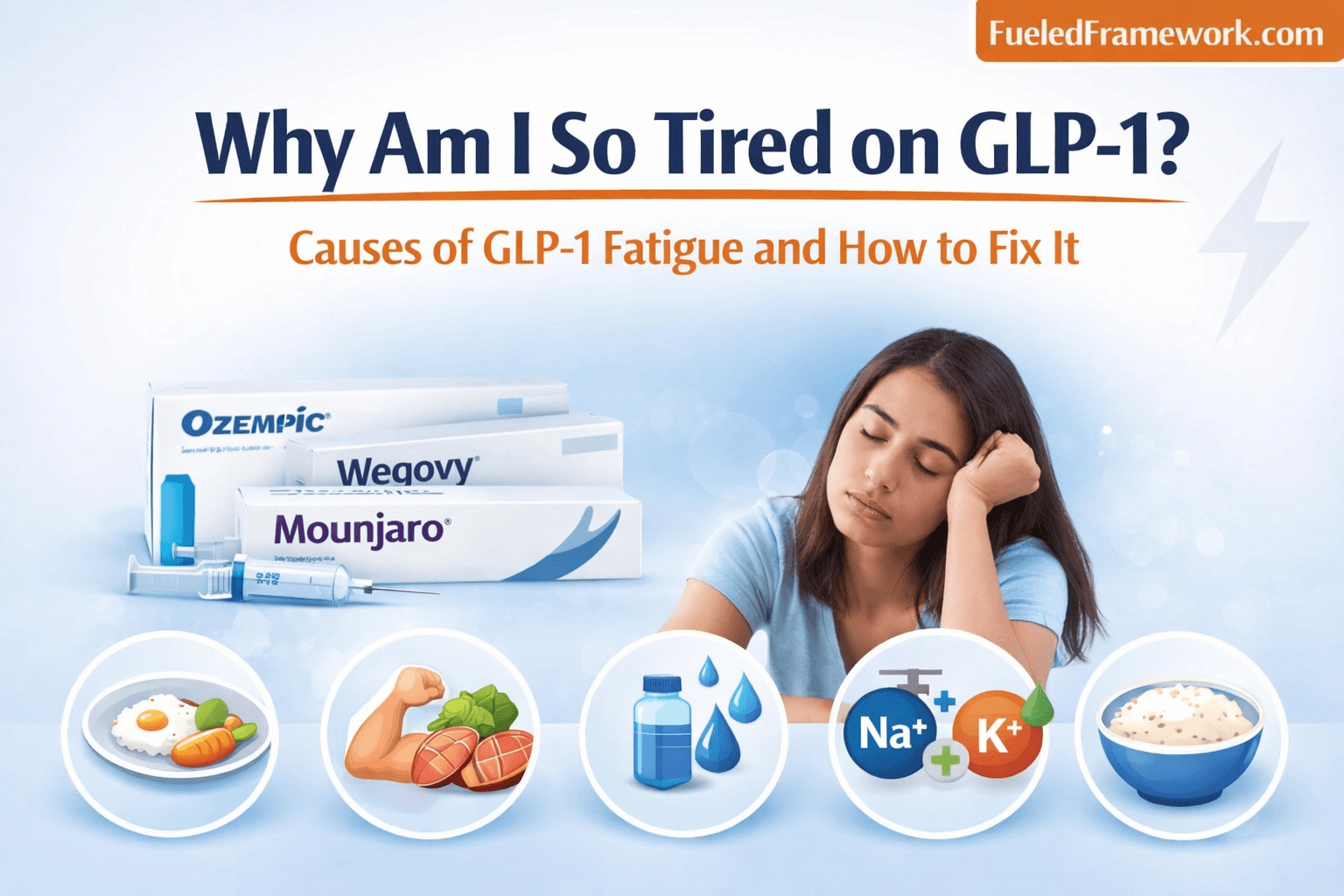
Why Am I So Tired on GLP-1. GLP-1 fatigue is one of the most common — and most misunderstood — side effects reported by people using medications like Ozempic, Wegovy, and Mounjaro. Many people start a GLP-1 medication expecting to feel better as the weight comes off. Instead, they feel drained. Low energy. Mentally foggy. Exhausted by mid-afternoon.
If this sounds familiar, you are not imagining it. GLP-1 fatigue is real. But in most cases, it is not caused by the medication itself. It is caused by what happens to your nutrition when the medication does its job too well.
GLP-1 receptor agonists are powerful appetite suppressants. They work by slowing digestion, signaling fullness to the brain, and reducing hunger cues. That is exactly what they are designed to do. But when your appetite drops dramatically, your calorie intake, protein intake, hydration, and electrolyte balance can all fall with it — and your energy follows.
This article breaks down the most common causes of fatigue while taking GLP-1 medications and gives you a clear, practical framework for getting your energy back.
In This Article:
- How GLP-1 medications affect your metabolism and appetite
- The six most common causes of GLP-1 fatigue
- Practical fixes for each cause
- A structured nutrition strategy to sustain your energy
- When to consult your healthcare provider
Many of the fatigue symptoms people experience during GLP-1 therapy are not caused by the medication alone but by the nutritional changes that happen when appetite drops significantly. Understanding how GLP-1 medications influence metabolism, energy balance, and nutrient intake is essential for managing these side effects effectively. Our complete GLP-1 Optimization Guide explains how these medications affect metabolism and outlines the key nutrition strategies needed to support energy, muscle preservation, and long-term results.
How GLP-1 Medications Affect Energy and Appetite
GLP-1 stands for glucagon-like peptide-1. It is a natural hormone your gut produces after eating. GLP-1 receptor agonists — like semaglutide (Ozempic, Wegovy) and tirzepatide (Mounjaro) — mimic this hormone at a much higher intensity and duration than your body naturally produces.
These medications work through several mechanisms simultaneously. They slow gastric emptying, which means food moves through your stomach more slowly and you feel full for longer. They signal the brain’s hunger centers to reduce appetite. They also influence insulin and blood sugar regulation, which plays a direct role in energy levels.
The result for most users is a significant reduction in appetite — sometimes a dramatic one. People who used to eat three meals a day find themselves barely finishing one. People who snacked regularly find they have no interest in food at all.
This reduction in food intake is the intended therapeutic effect. But when calorie intake falls sharply without a deliberate nutrition strategy to compensate, your body starts running on empty. The fatigue you feel is often your body’s response to an energy shortage — not a side effect of the drug itself.
GLP-1 receptor agonists mimic a hormone naturally released by the gut after eating. These medications influence appetite regulation, slow stomach emptying, and improve blood sugar control by acting on several metabolic pathways at once. Medical organizations such as the Cleveland Clinic explain that GLP-1 medications like semaglutide and tirzepatide were originally developed to treat type 2 diabetes before their powerful weight-loss effects were widely recognized.
(Authority reference: Cleveland Clinic GLP-1 overview)
The Most Common Causes of GLP-1 Fatigue
Low energy on GLP-1 is rarely caused by a single factor. In most cases, several nutritional and metabolic issues compound together. Understanding each one gives you a clear path to addressing them.
The six most common causes of GLP-1 fatigue are:
- Eating too few calories
- Low protein intake and muscle loss
- Dehydration and low electrolytes
- Metabolic adaptation and energy conservation
- Blood sugar fluctuations
- Poor sleep quality (often compounded by under-eating)
Cause 1: Eating Too Few Calories
This is the most common driver of fatigue in GLP-1 users. When appetite suppression is strong, many people unknowingly drop to extremely low calorie intakes — sometimes fewer than 800 calories per day. At that level, your body simply does not have enough energy to fuel normal daily activity.
Your body prioritizes essential functions like organ maintenance and temperature regulation. Everything else — mental focus, physical energy, mood — becomes secondary. This is why the fatigue associated with severe calorie restriction often includes brain fog, low motivation, and a sense of general depletion.
The challenge is that GLP-1 medications make this under-eating feel normal. You are not hungry. You feel fine in the moment. But the cumulative energy deficit builds over days and weeks, and the fatigue becomes chronic.
Most adults need a minimum of 1,200–1,500 calories per day to support basic metabolic function during a fat loss phase. Going below this consistently has consequences for energy, metabolism, and muscle mass. If you are not sure whether you are eating enough, the Fueled Framework article Signs You’re Not Eating Enough on GLP-1 covers the key warning signs in detail.
Cause 2: Low Protein Intake and Muscle Loss
When you lose weight, your body does not exclusively burn fat. Without adequate protein intake, a significant portion of the weight lost comes from muscle tissue. This is a critical problem — not just for body composition, but for energy.
Muscle is metabolically expensive tissue. It requires energy to maintain, and it produces energy for movement and activity. When muscle mass declines, your resting metabolism slows, your physical capacity decreases, and daily tasks begin to feel more exhausting than they should. This is often mistaken for GLP-1 medication fatigue when it is actually a consequence of inadequate protein and muscle preservation.
The GLP-1 appetite suppression effect makes this worse. When total food intake drops, protein intake almost always drops with it — unless you are actively prioritizing protein at every meal. Most GLP-1 users eat far less protein than they need during weight loss.
The Fueled Framework recommends a protein target of 0.7 to 1.0 grams per pound of your goal body weight per day. For most people, that means making protein the first priority at every meal and choosing high-quality sources like eggs, Greek yogurt, cottage cheese, chicken, fish, and lean beef.
For a complete guide to muscle preservation during GLP-1 weight loss, see Prevent Muscle Loss on GLP-1. To understand protein targets in detail, see How Much Protein on GLP-1 and How Much Protein Do You Really Need.
Cause 3: Dehydration and Low Electrolytes
Most people do not think of dehydration as a GLP-1 problem, but it is extremely common in this population. Here is why: thirst is closely linked to hunger. When appetite suppression is strong, many GLP-1 users stop drinking as much fluid as well.
Even mild dehydration — as little as two percent of your body weight in fluid loss — is enough to cause fatigue, headaches, reduced concentration, and dizziness. These symptoms overlap significantly with what many people describe as tiredness on GLP-1 medication, and in many cases, dehydration is a primary contributor.
Mild dehydration can significantly affect physical and cognitive performance. Research from the National Institutes of Health shows that fluid losses as small as two percent of body weight can reduce concentration, increase fatigue, and impair physical performance. For individuals eating less food due to GLP-1 appetite suppression, maintaining hydration and electrolyte balance becomes especially important.
(Authority reference: National Institutes of Health hydration research)
Electrolytes make the situation more complex. Sodium, potassium, and magnesium are essential minerals that regulate fluid balance, nerve function, and muscle contraction. When calorie intake drops and food variety decreases, electrolyte intake drops as well. Low electrolytes — particularly sodium and magnesium — are a well-documented cause of fatigue, muscle weakness, and poor sleep.
A practical hydration target is half your body weight in ounces of water per day — so a 200-pound person should aim for 100 ounces of water daily. Adding an electrolyte supplement or consuming sodium-rich foods like broth or salted nuts can help maintain electrolyte balance without adding significant calories.
Cause 4: Metabolic Adaptation and Energy Conservation
Your body is designed to survive scarcity. When calorie intake drops significantly, your metabolism does not stay constant — it adjusts. This process is called metabolic adaptation, and it is one of the most important — and most overlooked — reasons for fatigue during GLP-1-assisted weight loss.
Metabolic adaptation means your body becomes more efficient at using less energy. It reduces heat production, lowers non-exercise movement, and slows cellular activity. The result is that you burn fewer calories at rest — and you feel more tired. This is not a malfunction. It is your metabolism doing exactly what it evolved to do in the face of reduced food availability.
Scientists have studied metabolic adaptation extensively in weight-loss research. According to the Harvard T.H. Chan School of Public Health, prolonged calorie restriction triggers biological mechanisms designed to conserve energy and maintain body weight. These adaptations reduce energy expenditure and can contribute to fatigue when energy intake falls too low.
(Authority reference: Harvard Nutrition Source)
A related mechanism is adaptive thermogenesis — the specific process by which your body reduces heat production to conserve energy during calorie restriction. This contributes to feeling cold, sluggish, and low on energy even when you are not particularly active.
The key to managing metabolic adaptation is avoiding extreme calorie restriction and maintaining muscle mass through protein and resistance training. For a full explanation of this process, see What Is Metabolic Adaptation? and Adaptive Thermogenesis Explained Simply.
Cause 5: Blood Sugar Changes
GLP-1 medications directly influence blood sugar regulation. For most people this is beneficial — it is part of their therapeutic mechanism. But in combination with significantly reduced food intake, blood sugar can fluctuate in ways that contribute to fatigue.
When you eat infrequently or skip meals due to suppressed appetite, blood sugar can dip lower than usual between eating episodes. These low blood sugar periods — even when they are not technically hypoglycemic — produce symptoms that feel a lot like fatigue: dizziness, brain fog, shakiness, difficulty concentrating, and a sudden desire to lie down.
The fix is straightforward. Rather than eating one large meal when appetite briefly returns, aim for consistent smaller meals spread through the day. Meals that combine protein, fat, and complex carbohydrates produce a steadier blood sugar response than meals built around a single macronutrient. Consistent eating windows help your body regulate blood sugar more effectively.
How to Fix GLP-1 Fatigue
The good news is that GLP-1 fatigue is almost always correctable. Once you identify the contributing factors, adjusting your nutrition and lifestyle can produce noticeable energy improvements within days. Here are the most effective strategies.
1. Maintain Adequate Calorie Intake
Even if you are not hungry, your body still requires energy. Aim for a minimum of 1,200 calories per day for women and 1,500 calories per day for men during active fat loss. Think of eating as a scheduled task, not an appetite-driven one. Set regular meal times and eat even small amounts at those times.
2. Prioritize Protein at Every Meal
Protein does more than support muscle. It supports enzyme production, neurotransmitter function, immune activity, and repair processes that all influence energy levels. If you can only manage small meals, make protein the anchor of each one. Even 20–30 grams of protein per meal makes a significant difference in preserving lean mass and metabolic function.
3. Hydrate Consistently and Replenish Electrolytes
Make hydration a non-negotiable habit, separate from hunger signals. Keep a water bottle visible throughout the day. Add an electrolyte packet to your morning water. Eat foods naturally rich in potassium and magnesium, such as avocado, spinach, almonds, and salmon. These small changes have a disproportionate effect on energy.
4. Eat Balanced Meals to Stabilize Blood Sugar
Each meal should include protein, a quality fat source, and a complex carbohydrate. This combination slows digestion, prevents blood sugar spikes and crashes, and produces sustained energy. Avoid skipping meals and then eating very large amounts in one sitting — this pattern is especially common in GLP-1 users and contributes significantly to energy instability.
5. Maintain Muscle with Resistance Training
Resistance training sends a signal to your body to retain muscle even during calorie restriction. You do not need to do intense workouts. Two to three sessions per week of basic strength exercises — bodyweight movements, resistance bands, or light weights — is enough to meaningfully reduce muscle loss during GLP-1-assisted weight loss. More muscle means a better-functioning metabolism and more day-to-day energy.
6. Protect Sleep Quality
Under-eating directly impairs sleep quality. Low calorie and low carbohydrate intake can disrupt sleep architecture and reduce restorative deep sleep. Eating a small, balanced evening meal or snack — rather than going to bed on an empty stomach — can improve sleep quality and, consequently, daytime energy levels.
A Simple Nutrition Strategy to Prevent GLP-1 Fatigue
Random eating does not work well for GLP-1 users. When appetite is suppressed, you need a structured approach to nutrition — one that ensures your body gets what it needs even when hunger signals are absent.
This is the core philosophy of the Fueled Framework: a structured metabolic nutrition system built specifically for people who need to fuel their body intentionally rather than reactively.
The Fueled Framework Daily Energy Protocol
- Eat at scheduled times — not just when you feel hungry
- Start each meal with protein (aim for 25–35 grams per meal)
- Include vegetables and a complex carbohydrate source
- Drink at least 8–10 glasses of water daily
- Add an electrolyte source once per day
- Eat a small meal or protein snack in the evening to support sleep
- Track your intake for at least the first 2–4 weeks to catch any deficit
This structured approach addresses every cause of GLP-1 fatigue simultaneously. It maintains adequate energy intake, protects protein targets, supports hydration, and stabilizes blood sugar — all without requiring you to feel hungry or force large meals.
When Fatigue Might Require Medical Advice
In most cases, GLP-1 fatigue responds well to the nutritional strategies described in this article. However, there are situations where persistent or severe fatigue warrants a conversation with your healthcare provider.
Consult your provider if fatigue is severe, worsening, or does not improve after addressing nutrition and hydration. If you experience dizziness, heart palpitations, persistent nausea, or significant weakness alongside fatigue, seek medical evaluation. These symptoms may indicate nutrient deficiencies — particularly iron, B12, or vitamin D — that are common during calorie restriction and easily identified with bloodwork.
Your provider may also assess whether your medication dose is appropriate, or whether a temporary dose adjustment could help your body adapt while you stabilize your nutrition. GLP-1 medications are titrated over time for good reason — moving too quickly to a higher dose before the body adjusts can amplify side effects including fatigue.
The Fueled Framework does not provide medical advice. All medication decisions should be made with a qualified healthcare professional. The goal of this system is to support your nutrition in a way that maximizes the effectiveness and tolerability of your treatment.
Frequently Asked Questions
Why does GLP-1 make me tired?
GLP-1 medications suppress appetite, which often leads to significant reductions in calorie intake, protein intake, and hydration. When your body does not receive adequate energy, it conserves resources — and fatigue is one of the primary results. The medication itself is rarely the direct cause; the nutritional changes that occur during treatment are usually the main driver.
Does GLP-1 fatigue go away?
For many people, fatigue improves within the first few weeks as the body adjusts to the medication and appetite stabilizes. However, fatigue related to inadequate nutrition — under-eating, low protein, dehydration — will persist until those issues are addressed. Implementing a structured nutrition strategy is the most reliable way to resolve GLP-1 fatigue.
How many calories should you eat on GLP-1?
Most adults need a minimum of 1,200–1,500 calories per day to support basic metabolic function during fat loss. Eating below this level consistently leads to muscle loss, metabolic adaptation, and chronic fatigue. Even when appetite is suppressed, structured eating at scheduled times helps maintain adequate intake.
Does protein help GLP-1 fatigue?
Yes. Protein supports muscle preservation, which is directly linked to metabolic rate and daily energy levels. It also contributes to neurotransmitter production, enzyme function, and tissue repair — all of which affect how energized you feel. A protein target of 0.7 to 1.0 grams per pound of goal body weight is a reliable baseline for GLP-1 users.
How do you increase energy while taking GLP-1?
The most effective strategies are: eating at scheduled times regardless of hunger, prioritizing protein at every meal, staying consistently hydrated, maintaining electrolyte balance, building in light-to-moderate resistance training, and protecting sleep quality. Addressing all of these together produces the most significant improvement in energy levels.
Conclusion: GLP-1 Fatigue Is Fixable
GLP-1 fatigue is common, but it is not inevitable. In the vast majority of cases, the tiredness that GLP-1 users experience is a nutritional and metabolic problem — not a pharmaceutical one. The medication works by reducing appetite. The fatigue comes from what happens when appetite is reduced without a plan to compensate.
The six causes — inadequate calorie intake, low protein, dehydration, electrolyte imbalance, metabolic adaptation, and blood sugar fluctuations — are all addressable. They require intention and structure, but not dramatic restriction or extreme measures.
The Fueled Framework exists to provide exactly that structure. By approaching your nutrition as a metabolic system — one that requires consistent fueling, adequate protein, and deliberate hydration — you can take full advantage of GLP-1 medications without suffering from the energy consequences of under-eating.
You took a significant step by starting this treatment. The nutrition strategy you build around it determines how well it works — and how good you feel while it does.