
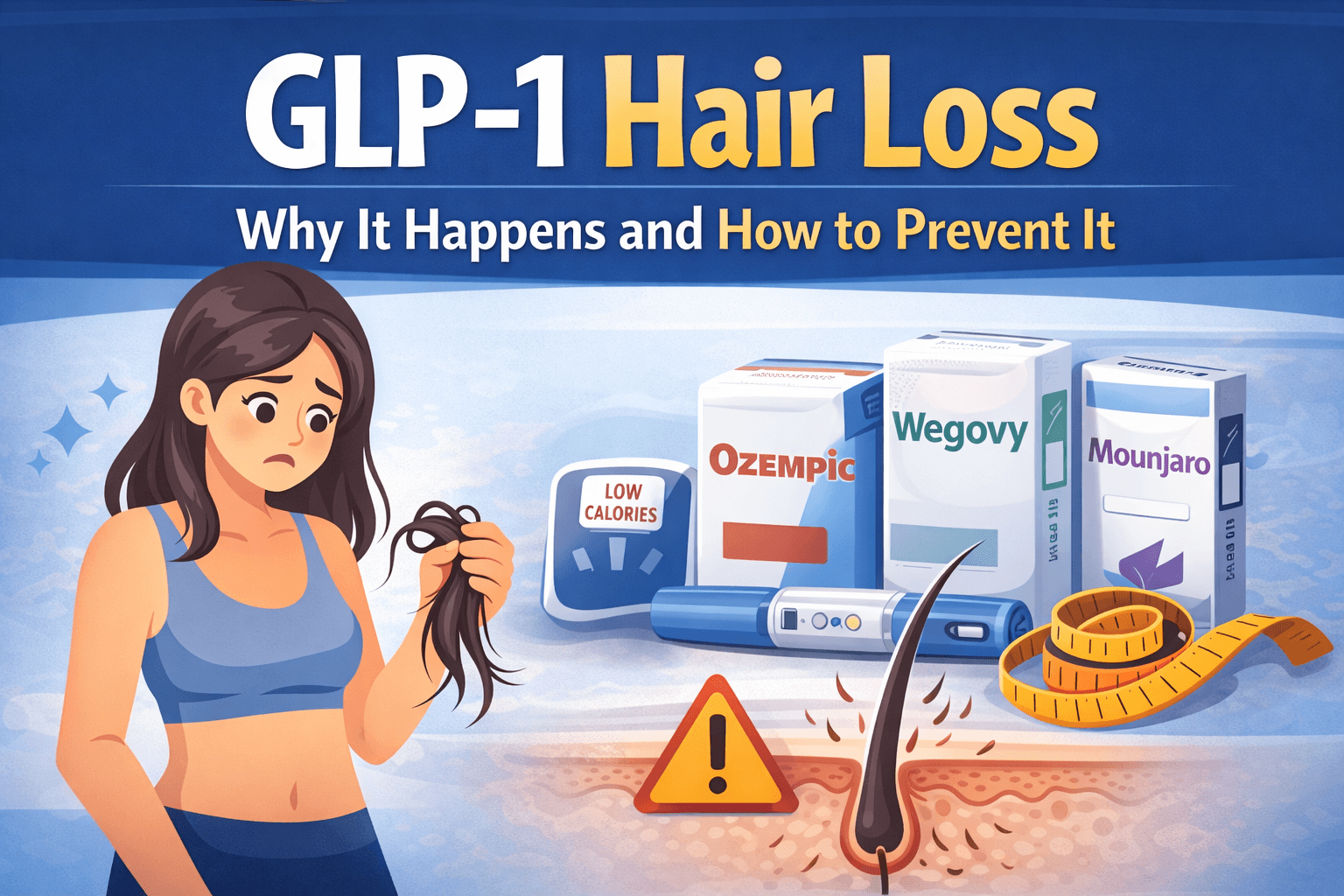
Many people using GLP-1 medications such as Ozempic, Wegovy, or Mounjaro notice increased hair shedding in the months following the start of treatment. It can be alarming. But in most cases, the medication itself is not directly responsible.
GLP-1 hair loss is most commonly a response to rapid weight loss, nutritional stress, and the metabolic changes that accompany significant calorie restriction. The body experiences these shifts as a form of physiological stress, and the hair follicle cycle can be one of the first systems to reflect that stress.
This article explains the biological mechanisms behind hair shedding during GLP-1 therapy, which nutrients are most critical for hair health, and what you can do to protect your hair while still losing weight effectively.
Do GLP-1 Medications Cause Hair Loss?
This is one of the most frequently asked questions among people starting semaglutide or tirzepatide-based therapies. The answer requires some nuance.
Clinical trial data for Wegovy (semaglutide) listed alopecia — the clinical term for hair loss — as a reported side effect in a small percentage of participants. However, it appeared at similar rates in comparison groups and was not isolated as a direct pharmacological effect of the drug. For Mounjaro (tirzepatide), similar patterns have been observed in real-world reporting.
The more accurate framing is this: GLP-1 medications are highly effective at reducing appetite and accelerating weight loss. That rapid weight loss is the primary driver of hair shedding — not the medication chemistry itself.
Ozempic hair loss, Wegovy hair loss, and Mounjaro hair loss are all terms people use to describe this experience. But the mechanism is the same regardless of which medication is involved. Rapid, sustained calorie restriction creates the conditions for a specific type of hair shedding called telogen effluvium. Lets get into the details below.
Telogen Effluvium: The Most Common Cause of Hair Shedding
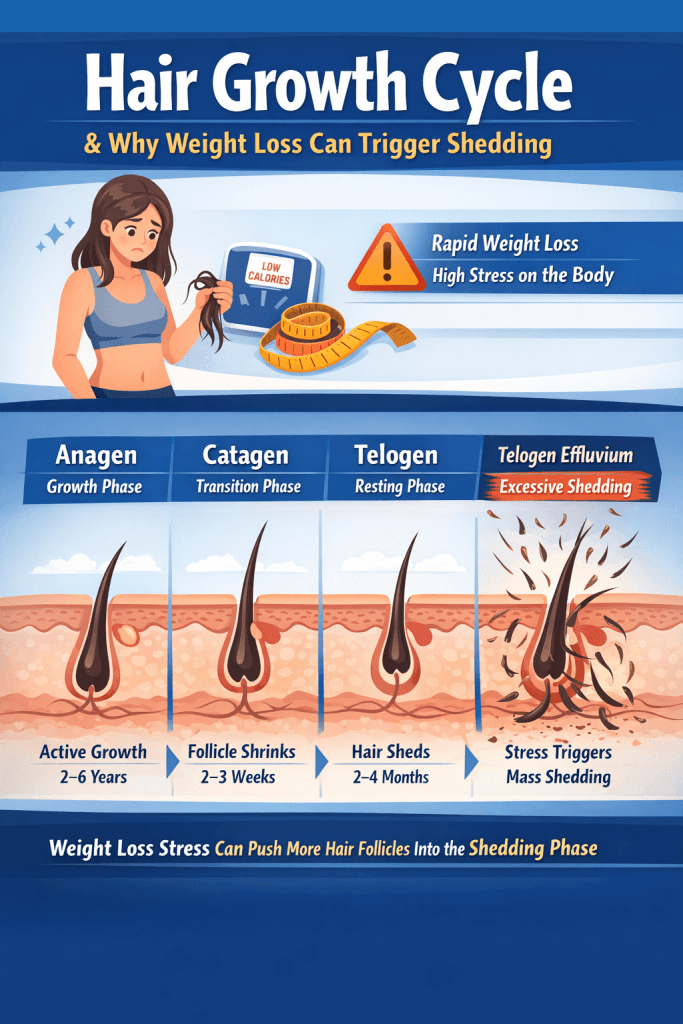
To understand why hair sheds during rapid weight loss, you need to understand the hair growth cycle. Hair follicles do not grow continuously. They cycle through three distinct phases:
- Anagen (growth phase): The active phase where hair grows from the follicle. This phase can last two to six years and determines hair length.
- Catagen (transition phase): A brief two-to-three week period where growth stops and the follicle begins to shrink.
- Telogen (resting phase): A resting phase lasting several months, after which the hair sheds and the follicle re-enters the anagen phase.
At any given time, roughly 85 to 90 percent of your hair follicles are in the anagen phase. When the body experiences significant physiological stress — such as rapid weight loss, surgery, illness, or severe calorie restriction — it can signal a large number of follicles to prematurely exit the growth phase and shift into the resting phase.
The result is telogen effluvium: a diffuse, temporary shedding of hair that typically becomes noticeable two to four months after the triggering event. It often resolves on its own once the stressor is reduced or removed, but the timeline depends heavily on whether the underlying nutritional issues are addressed.
Telogen effluvium during weight loss is well-documented and is not unique to GLP-1 medications. It has been observed following bariatric surgery, crash diets, and any other intervention that creates rapid fat loss.
Hair shedding during rapid weight loss is often caused by a condition called telogen effluvium, a temporary shift in the hair growth cycle that pushes more follicles into the shedding phase. According to the American Academy of Dermatology, telogen effluvium commonly occurs after physiological stress such as illness, surgery, or significant weight loss.
Rapid Weight Loss and Nutritional Stress
The body is a triage system. When energy and nutrient availability drops suddenly, it prioritizes functions that are essential for survival — cardiac function, brain activity, immune response, and hormone regulation. Hair growth is not on that priority list.
When calorie intake drops sharply, the body interprets this as a stress signal. Cortisol levels can rise. Metabolic rate begins to adapt. The energy allocation toward non-essential functions like hair follicle maintenance decreases.
This is why hair loss during weight loss is more pronounced with rapid fat loss than with gradual, sustained approaches. The faster the weight loss, the more pronounced the physiological stress response, and the greater the likelihood that hair follicles are affected.
The goal is not to avoid losing weight — it is to lose weight in a way that minimizes physiological stress. That means protecting calorie intake above a critical threshold, prioritizing high-quality protein, and maintaining micronutrient density even as total food volume decreases.
Protein Deficiency and Hair Health
Hair is primarily composed of a structural protein called keratin. Without adequate dietary protein, the body does not have the raw materials necessary to maintain active hair follicle growth. When protein intake is insufficient during weight loss, the body may down-regulate hair production to redirect amino acids toward higher-priority functions.
This is a significant concern for GLP-1 users because these medications can substantially reduce appetite and total food intake. If protein is not deliberately prioritized, the reduction in overall eating can translate into a meaningful protein deficit — one that accelerates both hair shedding and muscle breakdown.
Protein intake targets for GLP-1 users typically range from 0.7 to 1.0 grams per pound of goal body weight per day. For a detailed breakdown, see our guide on How Much Protein on GLP-1, and for general protein requirements, How Much Protein Do You Really Need.
Protecting protein intake is one of the most effective strategies for reducing hair shedding and preventing muscle loss simultaneously. For a full framework, see our article on Prevent Muscle Loss on GLP-1.
Micronutrient Deficiencies That Can Affect Hair
Hair follicle health depends on more than protein. A number of key micronutrients play direct roles in the hair growth cycle, and reduced calorie intake increases the risk of falling short on several of them.
- Iron: Iron deficiency is one of the most common nutritional causes of hair shedding in women. Ferritin, the storage form of iron, is particularly important for follicle health. Low iron can push follicles prematurely into the resting phase.
- Zinc: Zinc supports protein synthesis and cell division — both of which are required for hair follicle activity. Deficiency can lead to structural weakening of the hair shaft and increased shedding.
- Biotin: Biotin (vitamin B7) is frequently marketed for hair health, and there is evidence that deficiency contributes to hair loss. However, deficiency is less common than supplement marketing implies. Supplementation is unlikely to help unless actual deficiency is present.
- Vitamin D: Vitamin D receptors are found in hair follicles, and low levels have been associated with alopecia in some research. Many people are already marginally deficient in vitamin D, and reduced food intake can worsen this.
- Essential Fatty Acids: Omega-3 fatty acids support scalp health, reduce inflammation, and may support the anagen phase of hair growth. They are found in fatty fish, flaxseed, chia seeds, and walnuts.
When total calorie intake drops significantly, it becomes harder to maintain adequate intake across all of these nutrients. Eating nutrient-dense foods — lean proteins, leafy greens, legumes, whole grains, and healthy fats — becomes more important, not less.
Hair growth depends on consistent intake of several key nutrients including protein, iron, zinc, and B-vitamins. When appetite drops significantly, it becomes easy to miss these nutrients. Choosing foods that are nutrient-dense and easy to tolerate can help reduce the risk of hair shedding. Our GLP-1 Foods List outlines more than 60 foods that support protein intake, nutrient balance, and metabolic health while using GLP-1 medications.
Metabolic Stress During Weight Loss
Beyond raw nutrition, the physiological stress of significant calorie restriction has systemic effects on the body. When energy availability drops below what the body needs to maintain its current level of function, it triggers a cascade of adaptations sometimes referred to as metabolic adaptation or adaptive thermogenesis.
These adaptations include reductions in resting metabolic rate, changes in thyroid hormone activity, and shifts in how the body allocates available energy. For a detailed explanation, see What Is Metabolic Adaptation (And Why It Matters More Than You Think) and Adaptive Thermogenesis Explained Simply.
From the perspective of hair health, this metabolic stress environment is unfavorable. The combination of reduced energy availability, elevated cortisol, and downregulated non-essential functions creates conditions where hair follicles are more likely to shift into the resting phase.
Managing this stress through structured, adequate nutrition — rather than aggressive restriction — is the primary lever for reducing both metabolic adaptation and associated hair shedding.
Hair Growth Cycle and Why Weight Loss Can Trigger Shedding
How Long Does GLP-1 Related Hair Loss Last?
Telogen effluvium triggered by rapid weight loss is typically temporary. Most people begin to notice shedding two to four months after the triggering event, as the hair follicles that shifted into the resting phase begin to shed their existing hair.
In most cases, shedding stabilizes and regrowth begins within six to twelve months, provided the underlying stressors — rapid weight loss, nutritional deficiency — have been addressed. If the aggressive calorie restriction continues or nutritional gaps persist, shedding may continue for longer.
Hair regrowth after telogen effluvium is usually full and complete. The follicles themselves are not damaged; they simply went dormant. With appropriate nutritional support, the anagen phase restarts and new hair growth becomes visible within a few months of stabilization.
If shedding is severe, persistent beyond twelve months, or accompanied by scalp symptoms such as itching or inflammation, a dermatologist evaluation is appropriate to rule out other causes.
Which GLP-1 Medications Cause Hair Loss?
Hair shedding has been reported by some people using GLP-1 medications, but the important distinction is that the medications themselves are rarely the direct cause. In most cases, the shedding is linked to the rapid weight loss and reduced calorie intake that these drugs can produce. When the body experiences sudden changes in energy availability, it can trigger a temporary form of hair shedding known as telogen effluvium.
Ozempic (semaglutide)
Ozempic is widely prescribed for blood sugar control in people with type 2 diabetes, but it is also commonly used off-label for weight loss. Some users report increased hair shedding a few months after starting treatment. This timing is consistent with telogen effluvium, which often appears two to four months after rapid weight loss begins rather than immediately after starting the medication.
Wegovy (semaglutide)
Wegovy contains the same active compound as Ozempic but is approved specifically for chronic weight management. In clinical trials, a small percentage of participants reported hair loss, though researchers did not find evidence that the drug itself directly damages hair follicles. The more likely explanation is the significant appetite suppression and calorie reduction that often accompanies Wegovy treatment.
Mounjaro (tirzepatide)
Mounjaro works slightly differently by targeting both the GLP-1 and GIP hormone pathways, which can make it particularly effective for weight loss. As with other medications in this category, some users notice hair shedding several months into treatment. Again, this pattern strongly suggests that the rate of fat loss and nutritional intake play a larger role than the medication itself.
Zepbound (tirzepatide)
Zepbound is the weight-loss version of tirzepatide and functions similarly to Mounjaro. Because it is designed specifically to support significant weight reduction, the same principle applies: the faster the weight loss, the greater the physiological stress on the body. Without adequate protein intake and micronutrient support, this stress can increase the likelihood of temporary hair shedding.
Across all of these medications, the underlying mechanism tends to be the same. Rapid weight loss, reduced protein intake, and micronutrient gaps can shift hair follicles into the resting phase of the hair cycle. The good news is that this type of shedding is usually temporary and reversible once nutrition and metabolic balance are restored.
How to Prevent Hair Loss While Losing Weight on GLP-1
Prevention centers on reducing the severity of the physiological stress response through structured nutrition. The following strategies are evidence-informed and consistent with a sustainable weight loss approach.
- Prioritize protein at every meal. Aim for 0.7 to 1.0 grams per pound of goal body weight daily. This supports both hair follicle health and muscle preservation simultaneously.
- Avoid extreme calorie restriction. Very low calorie diets accelerate the stress response that drives hair shedding. A moderate deficit — typically 500 to 750 calories below maintenance — is more protective than aggressive restriction.
- Eat micronutrient-dense foods. Focus on iron-rich foods (red meat, lentils, spinach), zinc sources (meat, shellfish, pumpkin seeds), and vitamin D sources (fatty fish, fortified foods). Fill the plate rather than leaving it sparse.
- Support omega-3 intake. Include fatty fish, flaxseed, chia seeds, or walnuts regularly to support scalp and follicle health.
- Stay hydrated. Dehydration contributes to physiological stress. Adequate hydration supports overall metabolic function and nutrient transport.
- Pursue gradual weight loss where possible. Losing 0.5 to 1.5 pounds per week creates a smaller physiological stress signal than losing three or more pounds per week.
- Consider bloodwork. Iron, ferritin, vitamin D, and zinc levels can all be tested. If deficiency is confirmed, targeted supplementation may be appropriate under medical guidance.
Hair shedding during rapid weight loss is often linked to low protein intake and micronutrient deficiencies. Because GLP-1 medications suppress appetite, many people unintentionally eat far less than their body needs. Following a structured nutrition approach can help prevent this. Our GLP-1 Nutrition Guide explains how to structure meals, prioritize protein, and maintain nutrient intake while using medications like Ozempic, Wegovy, or Mounjaro.
These strategies do not guarantee zero hair shedding — some degree of temporary shedding during significant weight loss is physiologically normal. The goal is to minimize its severity and duration by supporting the body through the process.
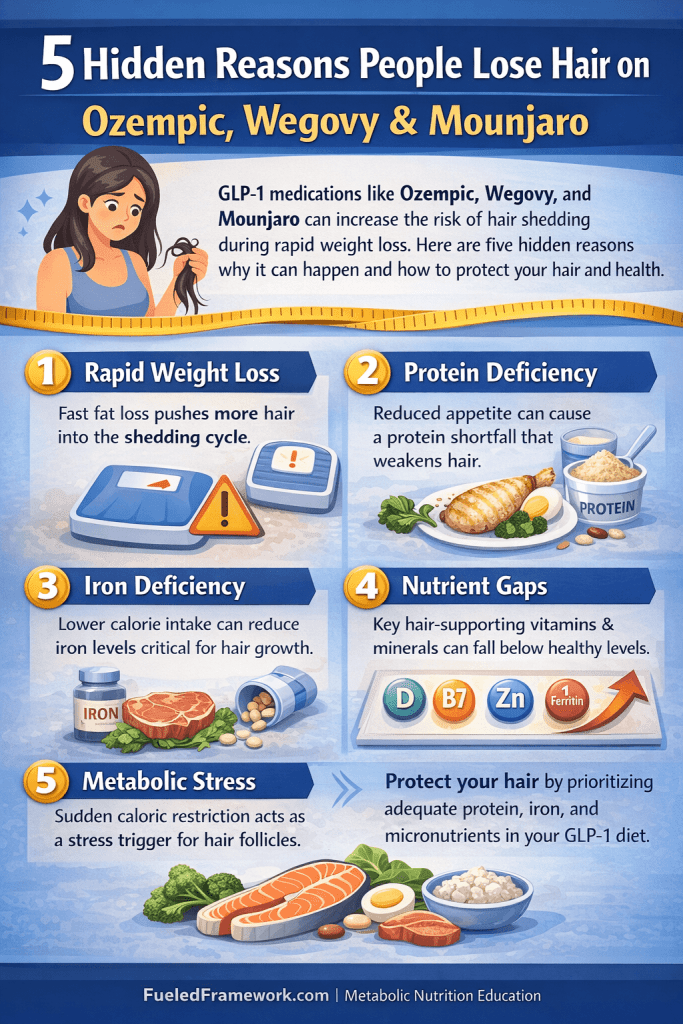
5 Hidden Reasons People Lose Hair on Ozempic, Wegovy & Mounjaro
A Structured Nutrition Strategy for Healthy Weight Loss
Fueled Framework is built on the principle that sustainable weight loss requires structured metabolic nutrition — not aggressive restriction. The difference between those two approaches is precisely what determines whether the body sheds hair, loses muscle, and stalls metabolically, or loses fat in a way that preserves body composition and function.
The Fueled Framework approach prioritizes protein intake as a foundation, distributes it across structured meals, and ensures that micronutrient-rich foods fill the remainder of the plate. Total calorie intake is managed deliberately, not crashed to the minimum sustainable level.
This approach supports four interconnected outcomes that matter during GLP-1 therapy: muscle preservation, metabolic health, adequate nutrient intake, and long-term weight loss sustainability. Hair health benefits directly from all four. When the body has enough protein to maintain structure, enough micronutrients to support follicle activity, and a metabolic environment that is not in full-scale conservation mode, hair shedding is minimized.
Common Mistakes That Increase the Risk of Hair Loss
Several common patterns increase the physiological stress that drives hair shedding. Recognizing these mistakes is the first step to avoiding them.
- Eating too little. When appetite suppression from GLP-1 medications is significant, some people eat far below a sustainable threshold. This accelerates both metabolic adaptation and hair follicle disruption.
- Not tracking protein intake. Many people assume they are eating enough protein when they are not. Without deliberate tracking or structured meal planning, protein deficits are common on reduced-calorie diets.
- Relying on low-nutrient foods. Eating highly processed, low-nutrient foods within a calorie-reduced diet means the body gets fewer micronutrients per calorie. This compounds the risk of deficiency.
- Pursuing rapid crash weight loss. Attempting to maximize short-term weight loss by eating as little as possible is counterproductive. The faster the loss, the more pronounced the physiological stress, and the more likely hair shedding becomes severe.
- Skipping meals. Irregular eating patterns create blood sugar instability and additional metabolic stress that can compound the effects of overall calorie restriction.
Avoiding these mistakes is not complicated. It requires consistency with a structured nutrition approach that treats protein and micronutrient intake as non-negotiable, even when appetite is suppressed.
Hair shedding during weight loss can be alarming, but in most cases it is temporary and related to nutrition and metabolic stress rather than the medication itself. Understanding how to structure meals, maintain adequate protein intake, and avoid nutrient gaps is essential when using GLP-1 medications. You can explore more strategies in the GLP-1 Diet & Nutrition hub, where we break down meal planning, protein targets, and common nutrition mistakes people make while using Ozempic, Wegovy, or Mounjaro.
Frequently Asked Questions
Does GLP-1 medication directly cause hair loss?
Not in most cases. Clinical data shows that hair loss reported by GLP-1 users is primarily associated with rapid weight loss and nutritional stress, not a direct pharmacological effect of the medication itself. The underlying mechanism is telogen effluvium triggered by physiological stress.
Is hair loss from weight loss permanent?
In the vast majority of cases, no. Telogen effluvium triggered by rapid weight loss is temporary. Hair follicles are not destroyed — they go dormant. Once the underlying nutritional and metabolic stressors are addressed, regrowth typically begins within a few months. Full regrowth usually occurs within six to twelve months.
How much protein should I eat to protect hair health?
General guidance for GLP-1 users is 0.7 to 1.0 grams of protein per pound of goal body weight daily. This range supports both hair follicle health and muscle preservation. Spreading intake across multiple meals rather than consuming it all at once improves absorption and utilization.
Can nutritional deficiencies cause hair shedding?
Yes. Deficiencies in iron, zinc, vitamin D, biotin, and essential fatty acids are all associated with increased hair shedding. Reduced calorie intake during weight loss can compound existing marginal deficiencies. Eating micronutrient-dense foods and monitoring bloodwork if shedding is significant are both sensible steps.
Rapid weight loss can also increase the risk of nutrient deficiencies, particularly protein, iron, and certain B-vitamins, which play an important role in hair growth and follicle health. Research published by the National Institutes of Health has shown that nutrient deficiencies can contribute to hair thinning and increased shedding.
How long does telogen effluvium last?
Telogen effluvium typically becomes noticeable two to four months after the triggering event, such as the start of rapid weight loss. Shedding usually stabilizes and begins reversing within six to twelve months if the underlying causes are addressed. If shedding continues beyond twelve months, evaluation by a dermatologist is appropriate.
Conclusion
GLP-1 hair loss is a real and understandably concerning experience for many people on medications like Ozempic, Wegovy, or Mounjaro. But the evidence consistently points to rapid weight loss, protein deficiency, and micronutrient gaps as the primary drivers — not the medication chemistry itself.
The mechanism is telogen effluvium: a temporary disruption of the hair growth cycle triggered by physiological stress. It is common during rapid fat loss. It is also, in most cases, preventable in its severity and reversible in its outcome.
The path forward is structured nutrition. Adequate protein intake, micronutrient-dense eating, moderate calorie restriction rather than extreme restriction, and deliberate attention to iron, zinc, vitamin D, and essential fatty acid intake collectively reduce the physiological stress that pushes hair follicles into the resting phase.
A structured approach to metabolic nutrition during GLP-1 therapy does not just protect muscle. It protects hair, metabolic rate, and long-term sustainability. That is what the Fueled Framework system is designed to provide.