
If you’re eating less, moving more, and still not losing weight — your metabolism is likely part of the story.
At the center of that is something called your basal metabolic rate, or BMR.
It’s the number of calories your body burns just to stay alive — and it quietly controls how easy or difficult fat loss actually is.
Most people trying to lose weight have heard the word ‘metabolism’ — but few understand what it actually means or how it works. The term gets thrown around loosely, often used to explain why weight loss feels slow or why some people seem to stay lean without much effort.
At the center of your metabolism is something called basal metabolic rate, or BMR. Understanding your basal metabolic rate is one of the most important things you can do if you want to approach weight loss intelligently. BMR represents the single largest component of the calories your body burns each day — and it has nothing to do with exercise.
This article explains what basal metabolic rate is, how it influences your ability to lose fat, and why protecting your metabolism through proper nutrition and muscle preservation is essential for long-term success — whether you’re dieting on your own or using GLP-1 medications like Ozempic, Wegovy, or Mounjaro.
Understanding metabolism is the foundation of sustainable fat loss, energy balance, and long-term metabolic health. Many people believe metabolism is either fast or slow, but in reality it is a dynamic system that constantly adapts to diet, activity levels, and body composition. To understand everything about metabolic foundations have a look here.
What Is Basal Metabolic Rate?
Basal metabolic rate is the number of calories your body burns at rest simply to keep you alive. It represents the minimum energy your body needs to maintain essential physiological functions when you are completely at rest — not moving, not digesting food, just existing.
These essential functions include:
- Breathing and lung function
- Circulation and heart function
- Brain activity and nerve function
- Body temperature regulation
- Cellular repair and protein synthesis
- Hormone production and organ function
None of these processes are optional. Your body performs them continuously, around the clock, whether you’re sleeping, sitting at a desk, or lying on a couch. The energy required to sustain all of this is your BMR.
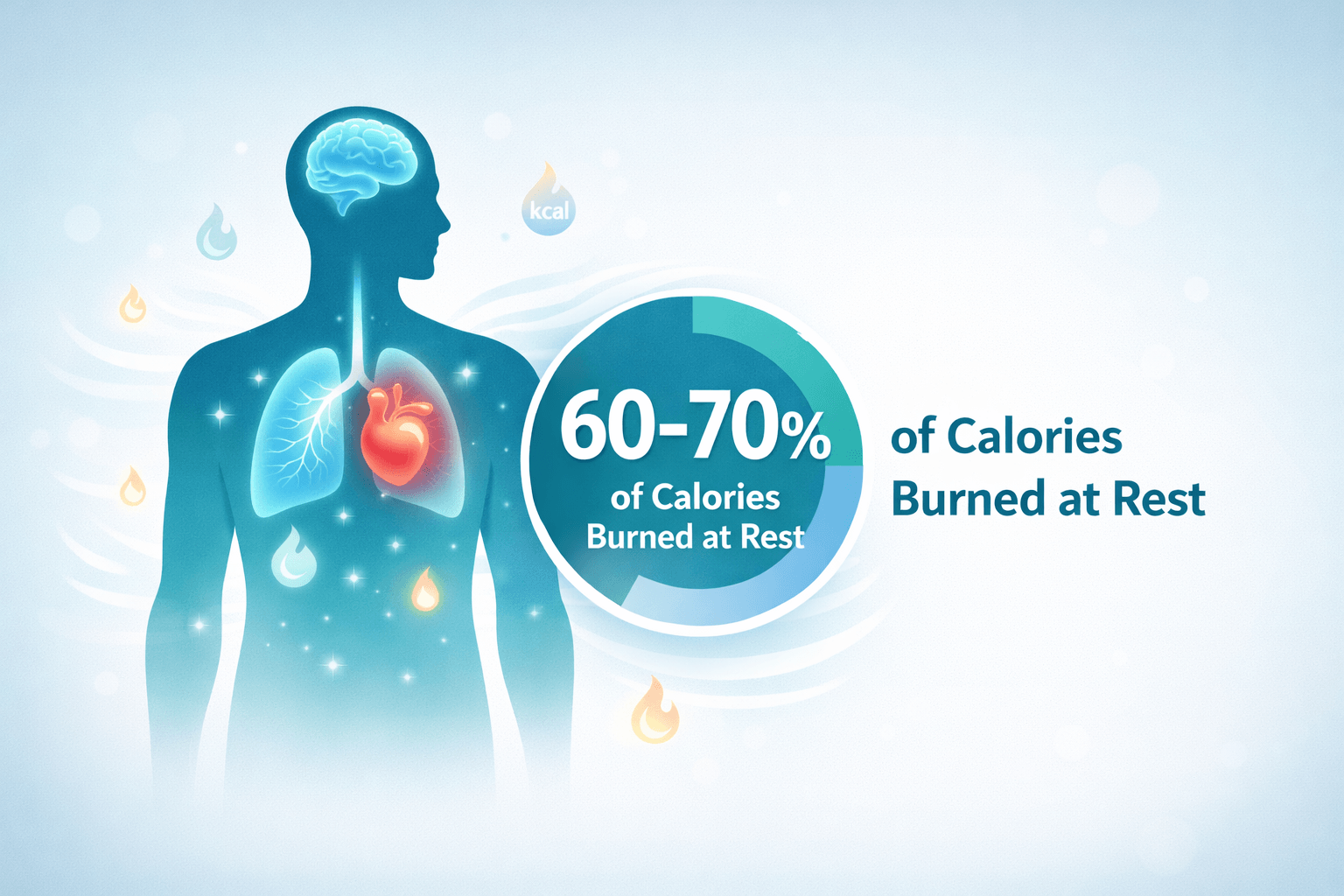
For most adults, BMR accounts for roughly 60 to 70 percent of total daily calorie expenditure. That means the majority of the calories you burn each day come not from exercise or movement, but from your body’s internal maintenance work.
For a complete definition of BMR click here
How the Body Uses Energy Each Day
Total daily energy expenditure — the full amount of calories your body burns in a day — is made up of three components:
1. Basal Metabolic Rate (BMR): The energy required to sustain life at rest. As noted, this accounts for 60–70% of daily calorie burn for most people.
2. Physical Activity: All movement — from formal exercise to walking, standing, and fidgeting. This accounts for roughly 15–30% of daily expenditure, though it varies significantly based on activity level.
3. Thermic Effect of Food (TEF): The energy your body uses to digest, absorb, and process nutrients. TEF accounts for approximately 10% of daily calorie expenditure, with protein requiring more energy to digest than carbohydrates or fat.
Because BMR forms the foundation of this system, it is the single most important variable in your overall energy balance. Protecting your BMR during weight loss is not optional — it is central to sustainable fat loss. For full details on how the body uses energy daily then click here.
Factors That Influence Basal Metabolic Rate
BMR is not the same for everyone. It varies based on several physiological and biological factors:
Body Size: Larger bodies have more tissue requiring energy maintenance. People who weigh more generally have higher BMRs, though composition matters more than weight alone.
Muscle Mass: Muscle is metabolically active tissue that requires more energy to maintain than fat. People with more muscle mass burn more calories at rest.
Age: BMR tends to decline with age, partly because muscle mass naturally decreases over time if not actively maintained through resistance training and adequate protein intake.
Sex: Biological males typically have higher BMRs than females of the same weight and age, largely because they tend to carry more muscle mass and less body fat.
Hormones: Thyroid hormones play a major role in regulating metabolic rate. Conditions like hypothyroidism can significantly reduce BMR. Other hormones, including insulin, cortisol, and growth hormone, also influence metabolic function.
Genetics: Individual genetic variation affects metabolic efficiency, body composition tendencies, and hormonal profiles — all of which influence BMR.
Of all these factors, muscle mass is the one you have the most control over. This makes it one of the most powerful levers available for supporting metabolic health during weight loss.
Muscle Mass and Metabolic Rate
Muscle tissue is metabolically active. That means it requires a meaningful amount of energy to maintain — even when you are not exercising. Fat tissue, by comparison, is relatively metabolically inert and burns very few calories at rest.
Research estimates that each pound of muscle burns roughly 6–10 calories per day at rest, compared to around 2 calories per pound for fat tissue. While this difference may seem small on a per-pound basis, it compounds significantly across the total muscle mass of an active person.
More importantly, muscle mass preserves your metabolic rate during and after weight loss. When you lose muscle — which happens readily under calorie restriction without adequate protein and resistance training — your BMR decreases, making it progressively harder to continue losing fat.
This is why muscle preservation is not simply a cosmetic goal. It is a metabolic strategy. For people using GLP-1 medications, this concern is especially acute — the appetite suppression from these drugs can lead to dramatic calorie reduction, which accelerates muscle breakdown if protein intake is not actively prioritized. The Fueled Framework article on how to prevent muscle loss on GLP-1 covers the specific strategies needed to protect lean mass during GLP-1 therapy.
Protein intake is the primary nutritional tool for protecting muscle. Understanding how much protein you need on GLP-1 — and how much protein you really need in general — is foundational to any structured metabolic nutrition approach.
Basal Metabolic Rate During Weight Loss
When you reduce calorie intake to lose weight, your body doesn’t simply burn stored fat and move on. It adapts. One of the most significant adaptations is a reduction in basal metabolic rate.
This happens through several mechanisms. First, as body weight decreases, there is less total tissue requiring energy maintenance — so BMR naturally decreases. Second, the body responds to calorie restriction by becoming more metabolically efficient, reducing energy expenditure beyond what weight loss alone would predict. Third, if calorie restriction is severe or protein intake is insufficient, muscle breakdown accelerates, further reducing metabolically active tissue.
This process — often called metabolic adaptation — is one of the primary reasons weight loss slows or plateaus during prolonged dieting, even when calorie deficits are maintained.
For a deeper understanding of how and why this happens, the Fueled Framework article on what metabolic adaptation is and why it matters explains the mechanisms in detail. The companion piece on adaptive thermogenesis explained simply covers how the body reduces non-exercise activity and heat production during calorie restriction as part of this same adaptive response.
The key takeaway is that metabolic adaptation is real, measurable, and predictable — and the best defense against it is maintaining muscle mass, eating adequate protein, and avoiding the extreme calorie restriction that accelerates it.
This process — often called metabolic adaptation — is one of the primary reasons weight loss slows or plateaus during prolonged dieting, even when calorie deficits are maintained.
If you’re currently struggling to lose weight despite eating less — especially on medications like Ozempic — this is often linked to how your metabolism adapts. You can read a full breakdown here: Why Am I Not Losing Weight on Ozempic.
How GLP-1 Medications Influence Metabolism
GLP-1 receptor agonists — including semaglutide (Ozempic, Wegovy) and tirzepatide (Mounjaro) — produce weight loss primarily by reducing appetite, slowing gastric emptying, and lowering overall calorie intake. They do not directly increase metabolic rate.
This distinction matters. Because GLP-1 medications work by suppressing appetite rather than boosting BMR, the metabolic challenges of calorie restriction still apply. In fact, the appetite suppression from these medications can be so strong that calorie intake drops well below what is needed to sustain muscle mass — especially if nutrition is not carefully managed.
People on GLP-1 therapy often consume significantly less food than before. Without a deliberate focus on protein quality and adequate total intake, this creates the conditions for accelerated muscle loss and metabolic adaptation — two outcomes that undermine both the short-term and long-term success of treatment.
Structured nutrition support is not a supplement to GLP-1 therapy. It is a core part of making it work properly.
Why Understanding BMR Matters for Weight Loss
One of the most damaging patterns in weight loss culture is the belief that eating as little as possible will produce the best results. In reality, eating far below your basal metabolic rate — below the calories your body requires simply to function — triggers a cascade of metabolic responses that work against fat loss.
These responses include increased muscle breakdown for energy, reductions in thyroid hormone activity, decreases in NEAT (non-exercise activity thermogenesis), and suppression of the hormonal environment needed for fat oxidation. The body experiences extreme restriction as a threat and adjusts accordingly.
Understanding your BMR gives you a functional floor for calorie intake. It represents the minimum your body needs to operate without triggering significant metabolic downregulation. Eating at or just below maintenance — rather than dramatically below it — supports more sustainable fat loss with less muscle loss and less metabolic adaptation.
For people on GLP-1 medications, this is especially important because the appetite suppression can mask the body’s normal hunger cues. Recognizing the signs you’re not eating enough on GLP-1 is a critical skill for protecting both your results and your metabolic health.
How to Support a Healthy Metabolism
Supporting your BMR during weight loss requires a combination of nutritional and lifestyle strategies. These are not complex — but they must be consistent.
Eat Adequate Calories: Avoid extreme restriction. Aim for a moderate calorie deficit that supports fat loss without triggering significant muscle breakdown or metabolic adaptation. A general guideline is a deficit of 300–500 calories below total daily energy expenditure.
Prioritize Protein: Protein is the most important dietary variable for protecting muscle during weight loss. A target of 0.7–1.0 grams of protein per pound of goal body weight is a reliable starting point for most adults. Higher protein intake also increases the thermic effect of food and supports satiety.
Resistance Training: Lifting weights or performing resistance-based exercise is the most direct way to preserve and build muscle mass. Even two to three sessions per week produces meaningful metabolic benefits.
Sleep Quality: Poor sleep disrupts growth hormone release, increases cortisol, impairs insulin sensitivity, and reduces the body’s ability to preserve lean mass during calorie restriction. Seven to nine hours of quality sleep per night is a metabolic intervention, not just a lifestyle preference.
Hydration: Even mild dehydration impairs metabolic processes. Water is involved in virtually every metabolic reaction in the body. Adequate hydration supports cellular energy production, nutrient transport, and waste elimination.
These strategies are not complicated. Their power comes from applying them consistently within a structured system that accounts for individual needs and goals.
A Structured Metabolic Nutrition Approach
The Fueled Framework is built on the principle that sustainable fat loss requires more than calorie counting. It requires understanding how your body works — specifically how metabolism, muscle mass, and energy balance interact — and building a nutrition system that works with your physiology rather than against it.
Rather than promoting restriction or quick fixes, the Fueled Framework emphasizes:
- Adequate protein intake to preserve lean mass and support metabolic rate
- Strategic calorie management that avoids triggering metabolic adaptation
- Consistent resistance training to maintain and build metabolically active tissue
- GLP-1 nutrition optimization for those using weight loss medications
This framework is especially relevant in the era of GLP-1 medications, where the appetite suppression these drugs produce makes intentional, structured nutrition more important — not less.
Common Myths About Metabolism
Myth: A slow metabolism is the primary reason people gain weight. While metabolic variation exists between individuals, the research suggests it is smaller than most people believe. Lifestyle factors — physical activity, muscle mass, sleep, and overall calorie intake — have a greater impact on weight than intrinsic metabolic rate alone.
Myth: Extreme calorie restriction speeds up fat loss. The opposite is often true. Severe restriction triggers metabolic adaptation, accelerates muscle loss, and reduces total daily energy expenditure — all of which make fat loss harder over time, not easier.
Myth: Metabolism is permanently damaged after dieting. Metabolic adaptation is real but not necessarily permanent. Research suggests that with adequate calorie intake, resistance training, and sufficient protein, much of the lost metabolic rate can be recovered. Diet breaks and structured refeeds may also help mitigate long-term adaptation.
Myth: Eating specific ‘metabolism-boosting’ foods significantly increases BMR. Foods like green tea or chili peppers have a very modest and temporary effect on calorie burn. The real metabolic drivers are muscle mass, overall protein intake, and physical activity — not superfoods.
Frequently Asked Questions
What is basal metabolic rate?
Basal metabolic rate is the number of calories your body burns at rest to sustain essential physiological functions — including breathing, circulation, brain activity, temperature regulation, and cellular repair. It is the single largest component of daily calorie expenditure for most people.
How is BMR calculated?
The most commonly used formulas for estimating BMR are the Mifflin-St Jeor equation and the Harris-Benedict equation. Both use weight, height, age, and sex as inputs. Online calculators can provide an estimate, though actual BMR varies based on body composition, hormonal status, and individual metabolic variation.
Does metabolism slow during weight loss?
Yes. As body weight decreases, BMR decreases proportionally because there is less tissue requiring energy maintenance. Additionally, the body undergoes metabolic adaptation during prolonged calorie restriction — reducing energy expenditure beyond what weight loss alone would predict. This is why weight loss often slows over time even when calorie intake remains consistent.
Can you increase your metabolic rate?
Yes — primarily through building and maintaining muscle mass. Resistance training combined with adequate protein intake is the most evidence-supported approach. Proper sleep, hydration, and avoiding extreme calorie restriction also support metabolic health. No supplement or food significantly increases BMR beyond these foundational strategies.
How much does muscle affect metabolism?
Each pound of muscle burns roughly 6–10 calories per day at rest, compared to approximately 2 calories per pound of fat. While individual estimates vary, the cumulative effect of carrying more lean mass across the entire body is meaningful — and more importantly, preserving muscle during weight loss protects your BMR from decreasing significantly.
Conclusion
Basal metabolic rate is the foundation of your body’s energy system. It represents the calories your body burns simply to stay alive — and it accounts for the majority of your total daily calorie expenditure. Understanding your BMR is not an academic exercise. It is practical information that shapes how you should approach calorie intake, protein targets, and the overall structure of your nutrition during weight loss.
When BMR decreases — whether from muscle loss, metabolic adaptation, or extreme restriction — fat loss becomes progressively harder to sustain. Protecting your metabolic rate means protecting your ability to reach and maintain your goals.
The strategies that support a healthy BMR are not complicated: maintain adequate calorie intake, prioritize protein, perform resistance training, sleep well, and stay hydrated. These principles apply whether you are managing weight through diet alone or using GLP-1 medications.
The Fueled Framework is built to help you apply these principles in a structured, sustainable way — so that your metabolism works with your goals, not against them. Explore the full Fueled Framework nutrition system to build a structured metabolic approach that protects your muscle, supports your BMR, and drives sustainable fat loss.