
When Appetite Suppression Goes Too Far
GLP-1 medications work by reducing appetite. That is the point. But there is a threshold where appetite suppression stops being helpful and starts working against you.
Knowing the signs you are not eating enough on GLP-1 is one of the most important things you can track during this process. The goal of this medication is fat loss. Not muscle loss. Not nutrient depletion. Not exhaustion.
When intake drops too low, your body responds in predictable ways. Most people do not recognize these responses as under-eating. They assume the symptoms are side effects of the medication itself.
Sometimes they are. But often, the problem is fuel.
This article walks through the warning signs, explains what is happening in your body, and gives you a structured starting point for correcting course.
Why Under-Eating Happens on GLP-1
GLP-1 medications slow gastric emptying and reduce hunger signals significantly. For many people, this is the first time in years they have felt genuinely indifferent to food.
That feeling can become a problem.
When you are not hungry, it is easy to skip meals. It is easy to eat very small amounts and feel satisfied. It is easy to go all day on minimal intake without noticing.
The issue is that your body still has nutritional requirements. Appetite suppression does not change your protein needs. It does not change your need for hydration, micronutrients, or adequate calories to protect lean mass.
Under eating on semaglutide and similar medications is common enough that it has become a recognized concern in structured nutrition programs. It is not a sign of failure. It is a sign that your intake needs active management, not just intuitive eating.
Many people underestimate how much nutrition matters during treatment. Following a structured GLP-1 nutrition system helps prevent fatigue, muscle loss, and under-fueling.
Early Warning Signs You Are Not Eating Enough
These symptoms do not always appear together. Some people experience one or two. Others experience several at once. Pay attention to patterns, not single incidents.
Fatigue
GLP-1 fatigue causes are often linked directly to inadequate caloric intake. Your body needs fuel to function. When intake is consistently low, energy output drops.
This is not the same as feeling tired after a busy day. Under-eating fatigue tends to be persistent. You wake up tired. You feel flat throughout the day. Simple tasks feel heavier than they should.
If you are sleeping adequately and still feel this way, look at what you are eating before you assume the medication is the cause.
Signs to watch for:
- Persistent low energy throughout the day
- Feeling drained without obvious physical exertion
- Needing more rest than usual
- Difficulty concentrating or staying mentally sharp
Hair Shedding
Hair shedding during weight loss is a well-documented physiological response to caloric restriction and protein deficiency. It is called telogen effluvium and it is temporary, but it is a clear signal that your intake has been insufficient.
It typically shows up six to twelve weeks after a period of under-eating. By the time you notice it, the deficit has already occurred.
Hair shedding is not inevitable during fat loss. It is more likely when protein intake is too low and total calories drop too far.
Signs to watch for:
- Increased hair in the shower or on your brush
- Noticeable thinning at the temples or crown
- Hair that feels more brittle or dry than usual
Physical Weakness
Not eating enough symptoms in the muscular system often show up as weakness. You may notice this during exercise, during everyday tasks, or when climbing stairs.
This type of weakness is different from muscle soreness after a workout. It is a generalized feeling that your body does not have the strength it normally does.
This can be a sign of muscle breakdown. When your body does not have enough protein and calories, it may begin breaking down lean tissue for energy.
Signs to watch for:
- Feeling physically weaker during workouts
- Struggling with tasks that were previously easy
- Noticeable reduction in exercise performance or stamina
Dizziness and Light-Headedness
Low intake affects blood sugar stability. When you are not eating regularly or eating very little, your blood sugar can drop and stay low for extended periods.
This shows up as dizziness, light-headedness, or that brief spinning feeling when you stand up quickly. It can also appear as shakiness between meals.
Hydration plays a role here too. Under-eating is often accompanied by low fluid intake, which compounds these symptoms.
Signs to watch for:
- Dizziness when standing up
- Shakiness or trembling between meals
- Feeling faint or unsteady at any point in the day
Low Motivation and Mood Shifts
This one is often overlooked. Low motivation, a flat mood, or a general lack of drive can be a metabolic signal, not just a mental health issue.
Your brain runs on glucose and requires adequate nutrition to support neurotransmitter production. When intake is too low for too long, cognitive and emotional output is affected.
People often describe this as feeling disconnected, unmotivated, or unusually irritable without a clear reason.
Signs to watch for:
- Persistent low mood without an obvious cause
- Loss of interest in things that normally engage you
- Increased irritability or emotional flatness
- Difficulty staying focused or motivated during the day
For quick reference, here is a simplified checklist.
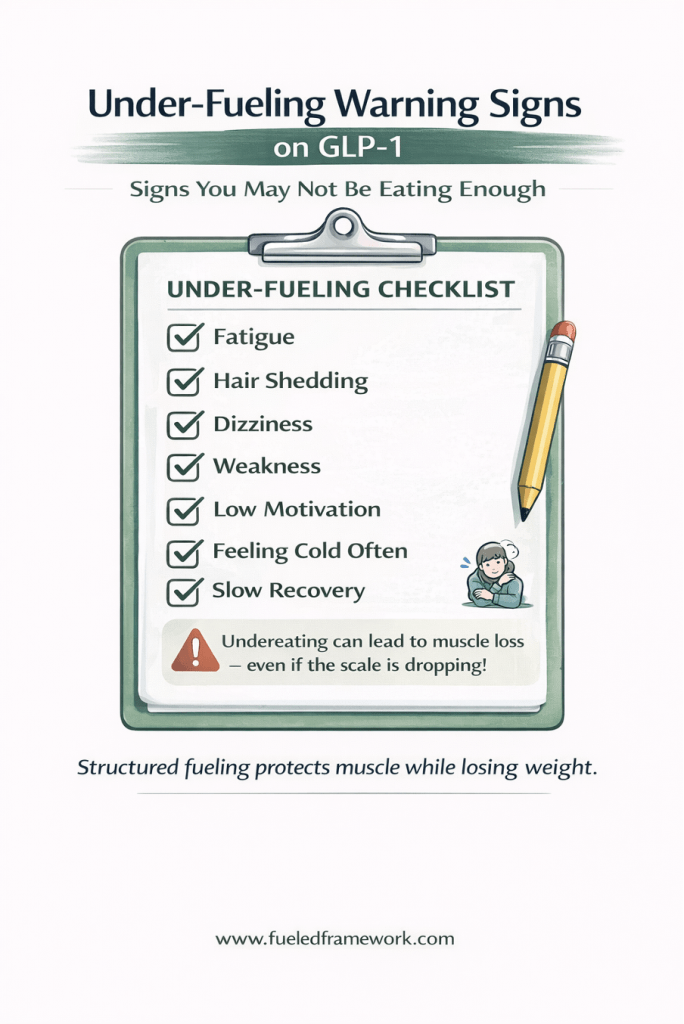
If several of these signs are present, it may indicate under-fueling rather than healthy fat loss.
Muscle Loss vs Fat Loss
This distinction matters more than most people realize.
The goal of a fat loss protocol is to reduce body fat while preserving lean muscle mass. That requires two things: adequate protein intake and enough total calories to prevent your body from breaking down muscle tissue for fuel.
When you eat too little for too long, your body does not selectively burn fat. It uses whatever is available, including muscle.
Muscle loss during weight loss creates real problems beyond aesthetics. Muscle supports your metabolism, your strength, your insulin sensitivity, and your long-term ability to maintain a healthy weight. Losing it during treatment can undermine the results you are working toward.
The scale may move, but if the weight you are losing is partly muscle, the outcome is not what you want.
Protecting muscle is not optional in a structured fat loss approach. It is the foundation.
The Protein Protection Reminder
Protein is the single most important nutrient to prioritize when appetite is suppressed.
The general recommendation within a structured metabolic system is a minimum of 0.7 to 1 gram of protein per pound of goal body weight per day. Some individuals will need to work with their healthcare provider or dietitian to determine the right target for their specific situation.
Protein deficiency signs during weight loss include the fatigue, hair shedding, and weakness described above. These are not random. They are the body communicating a specific shortage.
Protein also has a practical advantage when appetite is low. It is more satiating, it supports muscle retention, and it helps stabilize blood sugar across the day.
If you can only eat a small amount at any given meal, make protein the priority in that meal. Build the rest of the plate around it.
Simple protein-first approach:
- Lead every meal with a protein source
- Aim for 20–40 grams of protein per meal depending on your daily target
- Use protein-rich snacks if full meals are difficult
- Track intake consistently so you have actual data, not estimates
How to Safely Increase Intake Without Worsening Nausea
One of the reasons people stay under-fueled on GLP-1 medications is that eating more feels difficult. Nausea is real. Fullness sets in quickly. Larger portions can genuinely cause discomfort.
The solution is structure, not volume.
Small, structured meals eaten at consistent times are more effective than attempting to eat larger portions. Four to five small meals spread across the day is often better tolerated than two or three larger ones.
Practical strategies:
- Eat on a schedule. Do not wait for hunger signals. Set meal times and eat at those times regardless of appetite.
- Start small. A small portion eaten consistently is more effective than a large portion that causes discomfort and discourages eating.
- Choose calorie-dense, nutrient-dense foods. Greek yogurt, eggs, cottage cheese, and soft proteins are easier to eat in small amounts and deliver meaningful nutrition.
- Prioritize liquids that contribute nutrition. A protein shake or a high-protein smoothie can supplement intake on days when solid food is difficult.
- Hydrate between meals, not during. Drinking fluids with meals can increase fullness and reduce how much you eat. Separate hydration from meal time where possible.
- Track what you are actually eating. Estimation is often inaccurate when intake is low. A brief logging period can help you understand the real numbers.
Meal timing and small structured meals are not just strategies for comfort. They are tools for protecting your muscle, stabilizing your energy, and supporting the metabolic goals that brought you to this medication in the first place.
For many people, reduced appetite or nausea makes it difficult to eat enough. Knowing what to eat when GLP-1 causes nausea can help maintain proper nutrition.
When to Speak with Your Healthcare Provider
This article is educational nutrition content. It is not a substitute for medical advice.
There are situations where symptoms require professional evaluation, not just a dietary adjustment.
Reach out to your prescribing provider if you experience any of the following:
- Significant unintentional weight loss that is happening faster than expected
- Persistent vomiting that is preventing you from eating or drinking
- Severe dizziness, fainting, or inability to maintain normal activity
- Heart palpitations or chest discomfort
- Signs of severe dehydration, including very dark urine, no urination, or extreme dry mouth
- Confusion or significant cognitive changes
- Any symptom that feels serious or is worsening over time
Nausea and reduced appetite are expected on GLP-1 medications. But there is a difference between manageable suppression and a level of restriction that is affecting your health.
Your healthcare provider and a registered dietitian who works with GLP-1 patients can help you find the right intake level for your body, your dose, and your goals.
Summary: Structured Fueling Prevents Under-Fueling
The signs you are not eating enough on GLP-1 are not always obvious, especially when reduced appetite feels like the medication working correctly.
Persistent fatigue, hair shedding, physical weakness, dizziness, and low motivation are signals worth taking seriously. They often point to a nutrition gap, not a medication problem.
The framework for addressing this is straightforward:
- Prioritize protein at every meal
- Eat on a structured schedule rather than relying on hunger
- Choose small, frequent meals over infrequent large ones
- Separate hydration from meals to maximize intake
- Track your intake so you know your actual numbers
- Communicate with your healthcare provider when symptoms concern you
GLP-1 medications are a tool. A structured nutrition system is what makes that tool work. Under-fueling does not accelerate results. It compromises them.
Fueled Framework exists to give you the structure that appetite suppression cannot provide on its own. Protein minimums, meal timing, and consistent intake are not optional add-ons. They are the foundation of a protocol that protects your muscle and supports lasting metabolic health.
One of the easiest ways to avoid under-eating is by following a GLP-1 meal plan guide that prioritizes protein and balanced meals.