
Introduction: Why GLP-1 Changes How You Should Eat
If you are using a GLP-1 medication like semaglutide or tirzepatide, you have probably noticed that your appetite has changed significantly. Food feels less urgent. Portions feel smaller. Some meals feel like a chore.
This is the medication working as intended. But here is the part that most people miss: eating less does not automatically mean eating right. And on GLP-1 therapy, the difference between eating less and eating strategically matters more than most people realize.
A well-structured GLP-1 meal plan is not about restriction. It is about making every bite count. When your appetite is suppressed, the food you do eat needs to do serious work — protecting your muscle, stabilizing your energy, and supporting your metabolism through a period of rapid change.
GLP-1 medications were originally developed for diabetes treatment and are now widely used for weight management. According to the Mayo Clinic, these medications work by slowing digestion and increasing feelings of fullness, which can significantly reduce calorie intake.
The Fueled Framework is a structured metabolic nutrition system designed to support muscle preservation, energy balance, and sustainable weight management. While this guide focuses on GLP-1 medications, the framework itself applies to a much broader approach to metabolic health.
This guide walks through how to build that structure, why it matters, and what to do when eating feels difficult.
What This GLP-1 Meal Plan Guide Covers
- How GLP-1 medications change appetite and digestion
- Why rapid weight loss can cause muscle loss
- How much protein you should eat on GLP-1
- How to structure meals when appetite is low
- A full example GLP-1 meal plan
- What to eat when nausea appears
How GLP-1 Affects Appetite and Digestion
GLP-1 stands for glucagon-like peptide-1. It is a naturally occurring hormone your gut releases after eating. It signals fullness to your brain, slows the rate at which your stomach empties, and helps regulate blood sugar.
GLP-1 medications amplify this effect consistently throughout the day — not just after meals. The result is a significant and sustained reduction in appetite.
For most people, this means:
- Feeling full much faster than usual
- Losing interest in food between meals
- Experiencing stronger reactions to rich, fatty, or highly processed foods
- Noticing that their natural hunger cues become quieter or harder to read
The slowing of gastric emptying — the rate food moves from your stomach into your intestines — is particularly important from a nutrition standpoint. It means food stays in your system longer, which contributes to fullness but can also cause nausea, bloating, or discomfort if meals are too large or too rich.
Understanding this helps explain why the structure of your meals matters as much as the content. Smaller, more frequent meals are often better tolerated. Heavy, high-fat meals often are not.
The Hidden Risk: Muscle Loss During Rapid Weight Loss
This is the part of the GLP-1 conversation that does not get enough attention.
When you lose weight quickly — which GLP-1 medications can absolutely facilitate — your body does not lose fat exclusively. It also breaks down lean tissue, including muscle, for energy. This is called lean mass loss, and it is one of the most significant metabolic risks of rapid weight loss.
Why Muscle Loss Matters
Muscle is metabolically active tissue. It burns calories at rest, supports insulin sensitivity, maintains physical function, and protects your joints and bones. Losing it during weight loss creates a compounded problem: you weigh less, but your metabolism has slowed, your strength has declined, and your body composition has shifted in a direction that makes maintaining results harder over time.
This is not a hypothetical risk. Research on GLP-1 medications has shown that a meaningful portion of total weight lost can come from lean mass — sometimes approaching 25 to 40 percent of total weight lost in people who are not eating and training to protect it.
The Compounding Effect of Low Appetite
The challenge with GLP-1 therapy is that the suppressed appetite makes it easy — almost natural — to under-eat. When you are not hungry, it is easy to skip meals, eat very small amounts, or default to whatever is convenient rather than what is structured and complete.
This is exactly when muscle loss accelerates. A body in a significant caloric deficit without adequate protein has no choice but to break down its own tissue. The medication does not prevent this. Only your nutrition strategy does.
The Protein Protection Rule
If there is one nutritional principle that matters most during GLP-1 therapy, it is this: protein intake on GLP-1 is not optional. It is the foundation of everything else.
Protein serves several critical functions during this period:
- It provides the amino acids your body needs to maintain and repair muscle tissue
- It is the most satiating macronutrient, which helps you feel fuller on smaller amounts of food
- It has a higher thermic effect than carbohydrates or fat, meaning your body burns more calories processing it
- It supports stable blood sugar when eaten alongside carbohydrates
The Simple Formula
A commonly used and practical starting point for protein intake during active weight loss — particularly on GLP-1 therapy — is:
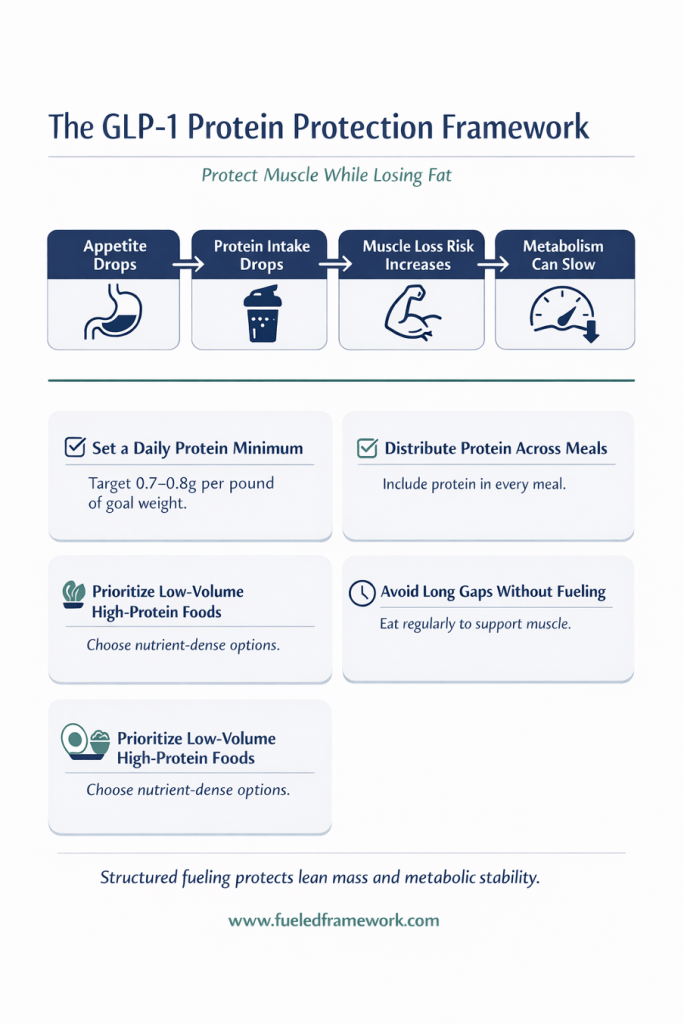
0.7 to 1.0 grams of protein per pound of your goal body weight per day.
So if your goal weight is 160 pounds, you are aiming for approximately 112 to 160 grams of protein daily.
This range accounts for the elevated protein needs during a caloric deficit. When calories are restricted, your body’s requirement for protein actually increases, because it is working harder to preserve tissue with fewer total resources available.
How to Hit Your Protein Target When Appetite Is Low
This is where structure becomes essential. When appetite is suppressed, it is unlikely you will hit 130 grams of protein by accident. You need a deliberate plan.
Practical strategies include:
- Anchor every meal with a protein source first. Prioritize protein before vegetables, grains, or anything else on your plate. If you fill up on the protein first, the rest of the meal becomes secondary.
- Use protein-dense foods that are easy to tolerate. Greek yogurt, cottage cheese, eggs, white fish, chicken, and protein shakes are all relatively easy on the digestive system and high in protein per calorie.
- Space protein across the day. Your body can only use so much protein for muscle synthesis at one time. Distributing it across three to four meals or snacks is more effective than trying to consume it all in one sitting.
- Do not rely on one large meal. On GLP-1 therapy, this rarely works. Smaller, protein-forward meals spaced throughout the day are both better tolerated and more metabolically effective.
How to Structure a GLP-1 Diet Plan
A well-designed GLP-1 meal plan has a few non-negotiable structural principles. These are not preferences — they are the framework that makes everything else work.
Principle 1: Protein First, Always
Every meal and every snack begins with a protein source. This is not about avoiding carbohydrates or fat. It is about ensuring that protein gets eaten before appetite fades. When you eat protein first, you are protecting your most important nutritional priority before fullness sets in.
Principle 2: Smaller Meals, More Frequently
Three large meals per day can be difficult to tolerate on GLP-1 therapy. Four to five smaller meals or structured snacks are often better tolerated and more effective for maintaining consistent nutrient intake throughout the day.
This does not mean grazing or eating constantly. It means intentional, structured mini-meals with clear protein anchors.
Principle 3: Minimize High-Fat, High-Sugar, Highly Processed Foods
These foods are already more likely to cause nausea and discomfort on GLP-1 therapy because of how they interact with slowed gastric motility. They are also low in nutritional value relative to their caloric density. On a day when you may only feel like eating 1,200 to 1,400 calories, every calorie needs to carry nutritional weight.
Principle 4: Hydration Is Non-Negotiable
Dehydration is a real risk on GLP-1 therapy, particularly in the early stages when nausea may reduce both food and fluid intake. Aim for consistent fluid intake throughout the day — not large amounts at once, which can worsen nausea and fullness, but steady, small amounts.
Electrolytes can be helpful, particularly sodium, potassium, and magnesium, especially if you are eating significantly less than usual.
Principle 5: Build Consistency, Not Perfection
The goal is not a perfect eating day every day. The goal is a repeatable structure that protects muscle and supports your metabolism consistently over time. A plan that works 80 percent of the time will always outperform a perfect plan that falls apart under nausea or fatigue.
Example Day of Eating on a GLP-1 Diet Plan
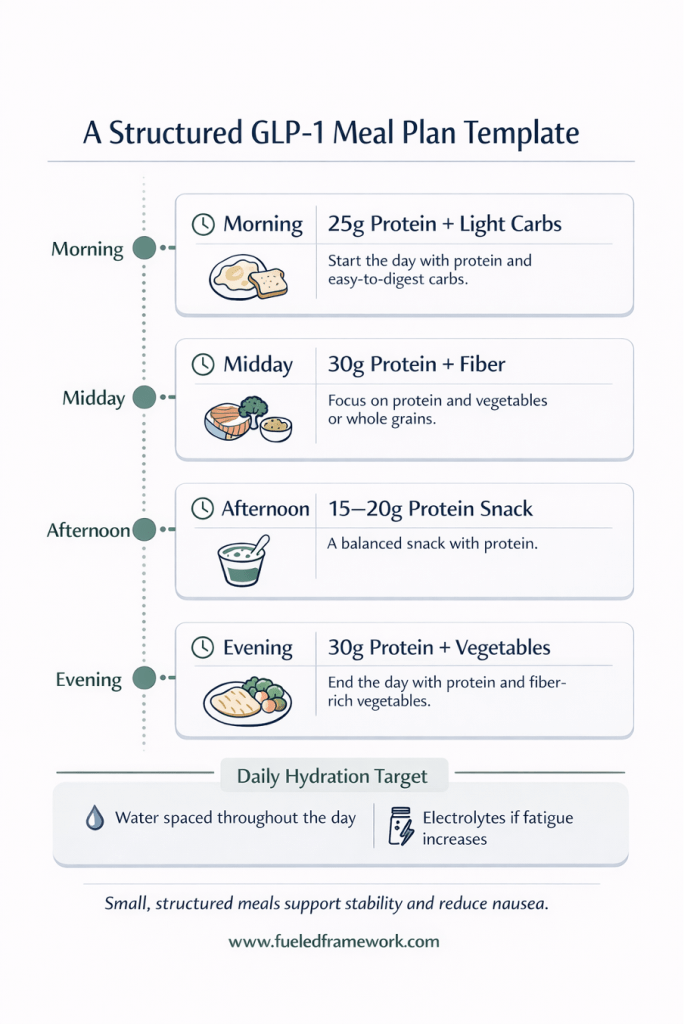
This is a general example — not a prescription. Actual caloric and protein targets vary by individual. This example is built around a 130–140g protein target.
Morning — Meal 1 2 scrambled eggs + ½ cup cottage cheese + small handful of berries Protein: ~30g | Easy to prepare, gentle on digestion, high satiety
Mid-Morning — Snack (optional, based on hunger) Greek yogurt (plain, full-fat or 2%) + 1 tbsp nut butter Protein: ~18–20g | Portable, protein-dense, minimal prep
Midday — Meal 2 4 oz grilled chicken or canned tuna + ½ cup cooked quinoa or rice + steamed vegetables Protein: ~35g | Well-balanced, easy to portion small, versatile
Afternoon — Snack Protein shake (whey or plant-based) with water or unsweetened milk Protein: ~25g | Ideal for days when appetite is low and solid food feels unappealing
Evening — Meal 3 4–5 oz white fish (tilapia, cod) or ground turkey + roasted vegetables + small portion of sweet potato or rice Protein: ~30–35g | Light on the digestive system, nutrient-dense, easy to tolerate in smaller portions
Daily Totals (approximate) Calories: 1,300–1,500 | Protein: 135–145g
This structure keeps protein distributed across the day, avoids large heavy meals, and prioritizes easy-to-digest whole foods. On lower-appetite days, the protein shake can replace or supplement a meal without requiring you to eat when eating feels difficult.
Want the Complete GLP-1 System?
Download the GLP-1 Quick Start Guide to learn how to structure protein, meals, and hydration during GLP-1 therapy.
[Start With the Free Guide]
What to Eat on GLP-1 When You Feel Nauseated
GLP-1 nausea is one of the most commonly reported side effects, particularly in the early weeks of therapy or after a dose increase. It can range from mild background discomfort to significant nausea that makes eating feel genuinely unpleasant.
This is also one of the most nutritionally dangerous periods, because the natural response — eating less or avoiding food entirely — compounds the risk of muscle loss and under-fueling.
Foods That Tend to Be Better Tolerated
- Plain proteins: Eggs, cottage cheese, plain Greek yogurt, white fish, and chicken breast are typically better tolerated than red meat or high-fat proteins
- Simple carbohydrates in small amounts: Plain rice, toast, crackers, or oatmeal can help settle the stomach and provide quick energy without overwhelming the digestive system
- Cold or room-temperature foods: Many people find that cold foods are easier to tolerate during nausea than hot, fragrant, or heavily seasoned foods
- Protein shakes: A well-formulated protein shake with minimal added ingredients can be an effective way to maintain protein intake when solid food is unappealing
- Broth-based soups: Light, lower-fat broths are easy on the stomach and support hydration simultaneously
Foods That Tend to Worsen Nausea
- High-fat meals (fried foods, rich sauces, fatty cuts of meat)
- Very sweet or sugary foods and drinks
- Spicy or heavily seasoned foods
- Large meal portions eaten quickly
- Carbonated beverages
A Practical Approach to Nauseated Days
On days when nausea is high, the goal is simplified: protect protein intake as much as possible, maintain hydration, and eat small amounts frequently rather than forcing large meals.
A protein shake, a small bowl of cottage cheese, a few crackers with a boiled egg — these are not ideal nutrition days, but they are adequate muscle-protective days. That distinction matters.
Do not use nausea as a reason to eat nothing. Use it as a reason to eat smaller, simpler, and more strategically.
Preventing Fatigue and Under-Fueling
Fatigue is a frequent complaint among people using GLP-1 medications, and it is often directly connected to under-fueling.
When your total calorie intake drops significantly — which is easy to do when appetite is suppressed — your body has less fuel available for basic physiological functions. Energy levels drop. Cognitive sharpness decreases. Exercise feels harder. Recovery slows.
This is not a sign that the medication is failing or that something is wrong. It is a signal that your nutrition structure needs adjustment.
The Most Common Under-Fueling Patterns on GLP-1 Therapy
Eating only once or twice per day. Suppressed appetite makes it easy to go long stretches without eating. But if you are only eating one or two meals, you are unlikely to hit your protein target and almost certainly creating significant energy deficits that drive fatigue and muscle loss.
Relying on low-calorie, low-protein foods. Salads, broth, and fruit are not bad foods, but they are not adequate standalone meals for someone trying to protect muscle and metabolic function. They need to be paired with meaningful protein sources.
Confusing lack of hunger with adequate fueling. GLP-1 medications reduce hunger signals. They do not reduce your body’s actual nutritional requirements. The absence of hunger does not mean your body does not need fuel — it means the signal has been quieted. You have to eat by structure and schedule, not by appetite alone.
Practical Fatigue Prevention
- Eat something — with protein — within 90 minutes of waking
- Do not go longer than 4–5 hours between eating opportunities
- Include a carbohydrate source at most meals to support energy availability
- If exercise is part of your routine, prioritize protein and carbohydrates before and after training
- Track your intake, at least loosely, until eating by structure becomes habitual
Signs You Are Not Eating Enough
Under-fueling on GLP-1 therapy is common, and it is often underrecognized because the suppressed appetite makes it feel normal. These are signs that your nutrition may need to be increased or restructured:
Physical signs:
- Persistent fatigue that does not improve with sleep
- Dizziness or lightheadedness, particularly when standing
- Hair loss or thinning (a recognized sign of significant caloric deficit)
- Feeling cold frequently
- Muscle weakness or noticeable loss of strength
Performance signs:
- Workouts feeling significantly harder than usual
- Slow or incomplete recovery between exercise sessions
- Loss of motivation to exercise at all
Cognitive signs:
- Difficulty concentrating or mental fog
- Irritability or mood changes without clear cause
- Trouble sleeping despite feeling exhausted
Body composition signs:
- Rapid weight loss without accompanying improvement in how you look or feel physically — this can indicate lean mass loss rather than fat loss
- Feeling “softer” or less defined even as the scale drops
If you are experiencing several of these signs, it is worth reviewing your intake carefully and, where appropriate, working with a registered dietitian or healthcare provider who is familiar with GLP-1 therapy.
The medication creates the conditions for weight loss. Your nutrition strategy determines whether that weight loss is primarily fat or a combination of fat and muscle.
Summary: Structured Fueling Protects Metabolism
GLP-1 medications are a powerful tool. But they are a tool that works best when paired with a deliberate nutrition strategy — not left to appetite alone.
The core principles of a strong GLP-1 meal plan come back to the same foundation every time:
- Protein first, at every meal. Hitting your protein target is the most important thing you can do to prevent muscle loss on GLP-1 therapy.
- Structure your meals — do not rely on hunger. Suppressed appetite is not an accurate guide to your body’s actual needs. Eat by schedule and by plan.
- Smaller meals, more often. This supports better tolerance, more consistent protein distribution, and steadier energy throughout the day.
- Protect yourself on hard days. Nausea, fatigue, and low appetite will happen. Having simple, easy-to-tolerate protein options available means you can maintain your baseline nutrition even on the most difficult days.
- Watch for signs of under-fueling. Fatigue, hair loss, weakness, and rapid unexplained weight loss are signals. Take them seriously and adjust your intake accordingly.
Weight loss during GLP-1 therapy can be significant and meaningful. The goal of structured fueling is to ensure that what you are losing is primarily fat — and that what you are keeping is the lean, metabolically active tissue your body depends on long after the weight loss phase is over.
A structured system, not a suppressed appetite, is what protects your metabolism. That is what Fueled Framework is built on.
Frequently Asked Questions About GLP-1 Meal Plans
How much protein should you eat on GLP-1?
Most people should aim for approximately 0.7–1.0 grams of protein per pound of goal body weight to protect muscle during weight loss.
Can you skip meals on GLP-1 if you are not hungry?
Skipping meals occasionally is not harmful, but consistently eating too little increases the risk of muscle loss and fatigue.
What foods are easiest to eat on GLP-1 when appetite is low?
Protein-dense foods that are easy to digest tend to work best, including Greek yogurt, eggs, cottage cheese, white fish, and protein shakes.
Continue Learning
Explore the full Fueled Framework metabolic nutrition system for strategies on protein intake, hydration, and metabolic health.
3 thoughts on “GLP-1 Meal Plan: A Meal Plan to Protect Muscle During Weight Loss”