
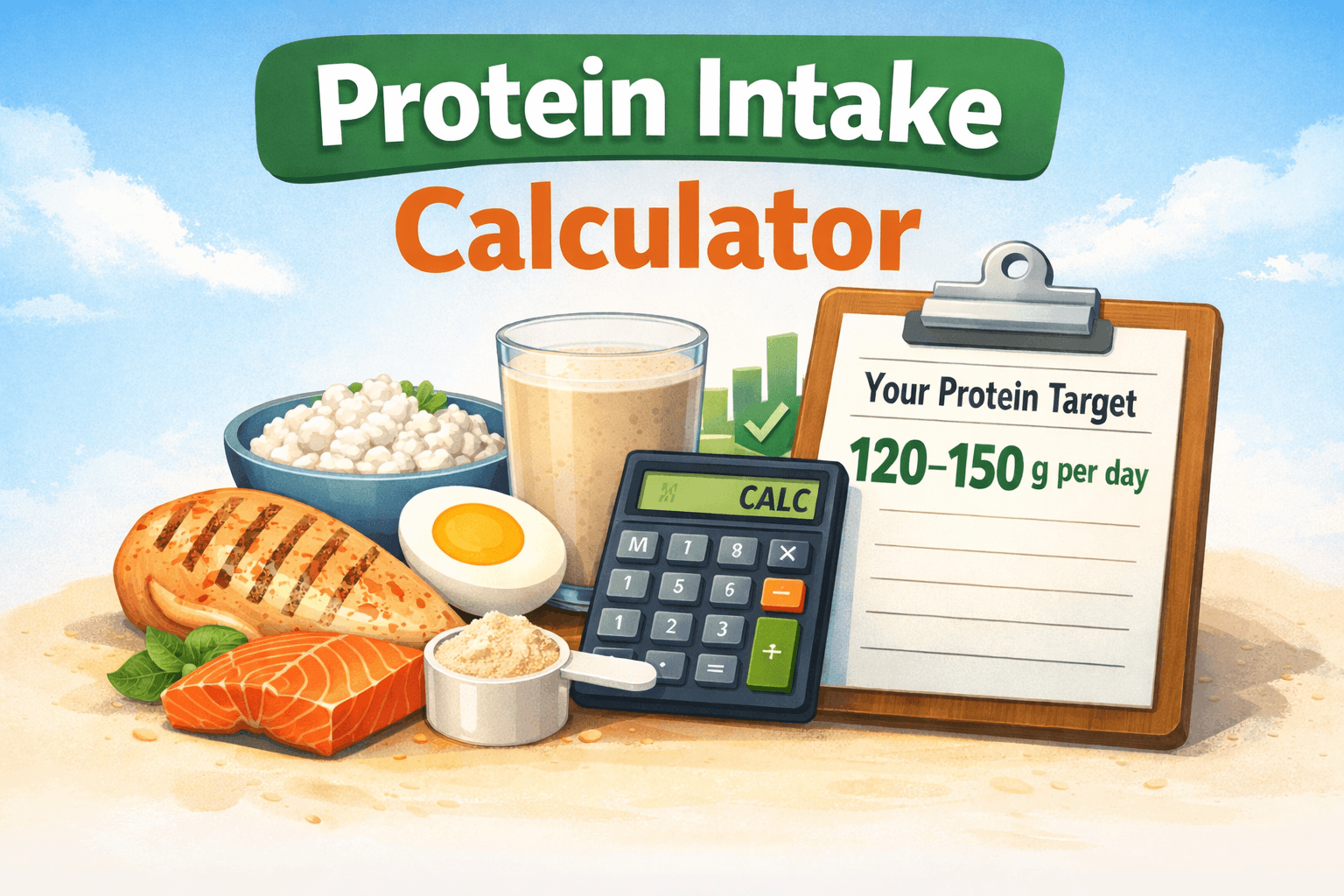
Protein plays a key role in maintaining muscle mass, supporting metabolism, and keeping energy stable throughout the day. Without enough protein, the body can break down muscle tissue for fuel — a process that slows metabolism and makes weight management harder over time.
Protein needs are not the same for everyone. Body weight, activity level, age, and health goals all influence how much protein a person requires each day. Use the protein intake calculator below to get a personalized daily protein target based on your individual details.
This calculator provides an estimate based on body weight, activity level, and goal. Individual needs vary. Consult a registered dietitian or healthcare provider for personalized guidance.
How the Protein Intake Calculator Works
The calculator estimates daily protein needs based on two key inputs: body weight and activity level. These are the most reliable starting points for personalizing protein intake without requiring complex lab testing or clinical assessments.
People who exercise regularly, carry more lean muscle, or are working toward fat loss generally require more protein than sedentary individuals. The calculator applies evidence-based ranges to match an intake target to each user’s situation.
Typical Protein Intake Ranges
Recommended protein intake varies by how active a person is. The following ranges reflect current guidance used by nutrition professionals:
| Activity Level | Recommended Protein Intake |
| Sedentary adults | 0.8 g per kg body weight |
| Moderate activity | 1.2–1.6 g per kg |
| Highly active individuals | 1.6–2.2 g per kg |
The calculator uses these same activity-based ranges to estimate a daily protein target. Results are presented in grams per day, based on the body weight and activity level entered.
Why Protein Intake Matters
Getting enough protein each day supports several important functions in the body:
- Maintaining lean muscle mass during weight loss or as the body ages
- Supporting a healthy metabolism by preserving metabolically active tissue
- Improving satiety — protein is the most filling macronutrient and helps reduce overall calorie intake
- Assisting recovery after exercise by supplying the building blocks needed for muscle repair
Meeting a daily protein target is one of the most consistent habits that supports long-term health and body composition goals.
Protein Intake and Weight Loss
During a calorie deficit, the body is at increased risk of breaking down muscle tissue for energy. Higher protein intake helps protect against this and supports the preservation of lean mass throughout the weight loss process.
Many people working toward fat loss benefit from a protein intake in the 1.2 to 1.6 grams per kilogram range. This level of intake has been shown to improve appetite control, reduce the likelihood of muscle loss, and support better body composition outcomes compared to lower-protein approaches.
The National Institutes of Health notes that the recommended dietary allowance for protein is about 0.8 grams per kilogram of body weight for most adults.
Experts at the Cleveland Clinic explain that higher protein intake may help preserve muscle mass during weight loss.
Protein Intake for People Using GLP-1 Medications
Individuals using GLP-1 medications such as Ozempic, Wegovy, or Mounjaro often experience a significant reduction in appetite. While this supports weight loss, it also creates a risk of under-eating protein, which can lead to muscle loss over time.
Meeting protein targets becomes especially important for GLP-1 users, as lower food intake makes it easy to fall short. Fueled Framework provides a dedicated GLP-1 Protein Calculator designed specifically for individuals on these medications, taking reduced appetite and muscle preservation into account.
| Using Ozempic, Wegovy, or Mounjaro? The Fueled Framework GLP-1 Protein Calculator is designed specifically for people using GLP-1 medications. It accounts for reduced appetite and focuses on protecting lean muscle during weight loss. GLP-1 Protein Calculator |
Related Guides and Tools
For more detail on protein needs and nutrition strategies, explore these resources on Fueled Framework:
- How Much Protein Do You Need Per Day? — A full educational guide to daily protein requirements
- High-Protein Foods Guide — The best protein sources for muscle maintenance and weight loss
- GLP-1 Protein Calculator — A protein calculator designed for Ozempic, Wegovy, and Mounjaro users
- Nutrition Tools Page — All Fueled Framework calculators and planning resources in one place
Next Steps
The protein intake calculator provides an evidence-based estimate to help set a starting daily target. Individual needs can vary depending on health history, specific goals, and how the body responds over time.
Use the result as a practical baseline and pair it with a consistent, protein-forward nutrition plan. For personalized guidance, consult a registered dietitian or qualified healthcare provider.
According to the Harvard T.H. Chan School of Public Health, protein is essential for building and repairing tissues and supporting metabolic health.