
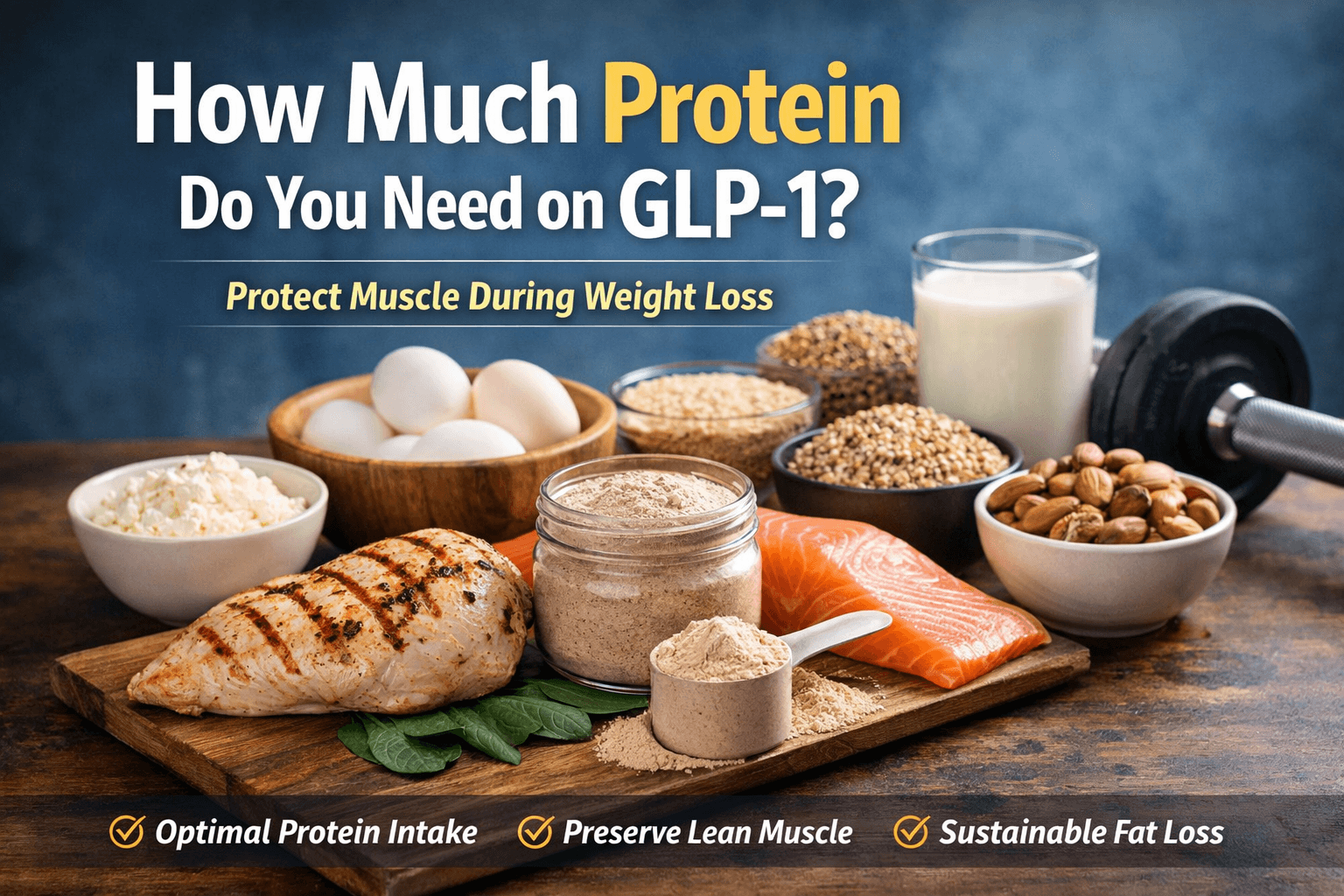
Why Protein Matters More on GLP-1
One of the most common questions people ask when starting GLP-1 medication is how much protein on GLP-1 is needed to protect muscle while losing weight.
GLP-1 medications are highly effective at reducing appetite. That’s the point. But when you eat significantly less food, you also take in fewer nutrients — including protein.
This is where many people run into trouble. Knowing how much protein on GLP-1 you actually need becomes one of the most important nutritional questions you can ask.
Without enough protein, your body doesn’t just lose fat. It breaks down muscle tissue too. Muscle is metabolically active. Losing it slows your metabolism, weakens your body, and makes it harder to maintain results long term.
Getting protein right isn’t optional on GLP-1. It’s the foundation everything else is built on.
Why Appetite Suppression Increases Protein Risk
GLP-1 medications work partly by slowing gastric emptying. You feel full faster and stay full longer. For most people, total daily food intake drops significantly.
That reduction in overall intake is intentional. But it creates a specific nutrition problem.
When you eat less food, it becomes easy to fall short on protein without realizing it. A typical day on GLP-1 might look like a small breakfast, a light lunch, and a modest dinner — with very little hunger prompting you to eat more. If those meals aren’t structured around protein first, you can easily end up consuming far less than your body needs.
This is different from standard calorie restriction. GLP-1 medications suppress hunger signals so effectively that even the feeling of needing food disappears. Your appetite is no longer a reliable guide for how much to eat.
That’s why a structured approach to protein requirements during weight loss is necessary — not just helpful.
GLP-1 medications reduce appetite and slow gastric emptying, which is why food intake often drops significantly during treatment according to the Mayo Clinic.
How Much Protein on GLP-1 Is Needed to Protect Muscle?
Standard dietary guidelines suggest somewhere around 0.36 grams of protein per pound of body weight per day. For most sedentary adults, this is considered the minimum to prevent deficiency.
That number is not appropriate for GLP-1 users.
When you are in a calorie deficit — especially a significant one — your protein needs go up, not down. Your body is under metabolic stress. Muscle tissue becomes more vulnerable to breakdown. Higher protein intake is one of the primary tools for lean mass protection during fat loss.
Research in the context of calorie restriction generally supports a much higher intake, often in the range of 0.7 to 1.0 grams per pound of body weight, particularly for people who are active or working to preserve muscle.
For GLP-1 users eating smaller volumes of food, hitting the higher end of this range matters.
Adequate protein intake is one of the most important strategies to prevent muscle loss on GLP-1 while losing weight.
A Simple Protein Formula for GLP-1 Users
The most practical approach is to calculate how much protein on GLP-1 is needed based on your goal body weight, not your current weight. This keeps your target realistic and aligned with where you’re heading.
The Formula
0.7 to 1.0 grams of protein × your goal body weight in pounds
Use 0.7 as your minimum starting point. If you are more active or focused on building or maintaining significant muscle, aim closer to 1.0.
This range gives you a realistic daily protein target that protects muscle without requiring you to eat volumes of food you can’t tolerate.
Why Goal Weight Instead of Current Weight
Using your goal weight makes the calculation leaner and more appropriate. If you are significantly above your goal weight, calculating protein per pound of current weight can produce a target that’s unnecessarily high and difficult to hit on a reduced appetite.
Goal weight anchors your intake to a sustainable, realistic target.
Example Calculation
Here’s how this looks in practice.
Example: A person whose goal weight is 160 pounds.
- At 0.7 g/lb: 160 × 0.7 = 112 grams of protein per day
- At 1.0 g/lb: 160 × 1.0 = 160 grams of protein per day
A reasonable daily target for this person would fall somewhere between 112 and 160 grams, depending on activity level and how well they are tolerating food intake.
For most GLP-1 users in a moderate fat loss phase, 120 to 140 grams per day is a solid working target at this goal weight.
This is not a medical recommendation. It’s a practical starting point for building a protein-first nutrition structure.
To make this easier to visualize, here is a simple protein calculation and distribution guide.
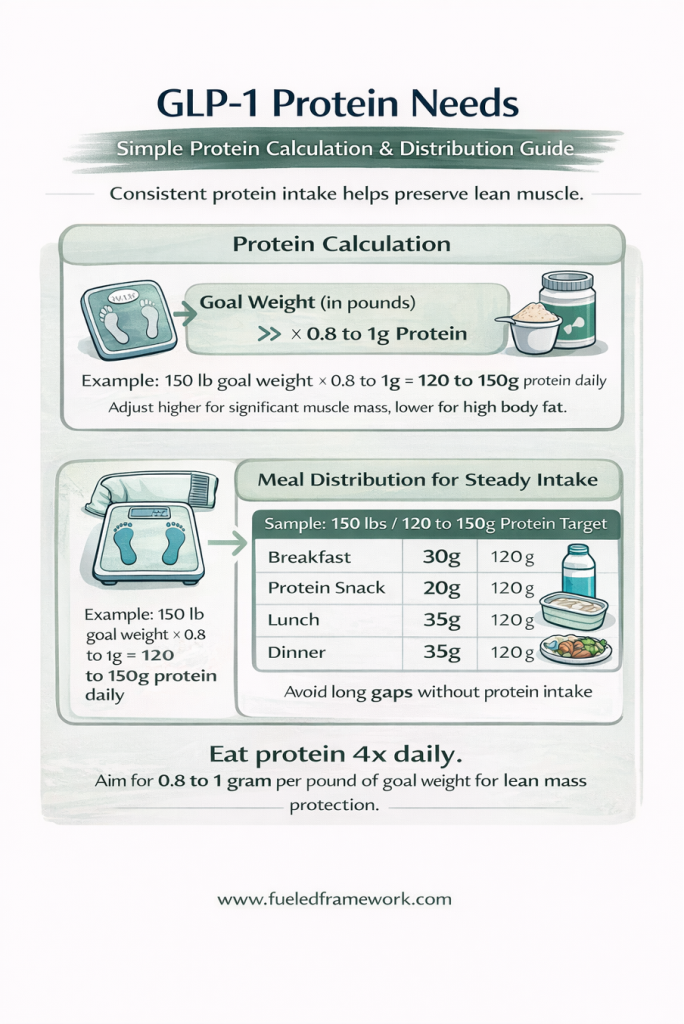
The goal is not perfection. The goal is consistent daily protein intake spread evenly across meals.
How to Distribute Protein Across Meals
Hitting your daily protein target is important. How you spread it across the day matters equally.
Your muscles can only use a certain amount of protein at one time for muscle protein synthesis. Eating the majority of your protein in a single meal is not as effective as distributing it steadily throughout the day.
On GLP-1, meal volume is smaller and appetite is inconsistent. This makes intentional protein distribution even more important.
A Practical Distribution Example
Using a daily target of 120 grams:
Breakfast: 30 grams Lunch: 35 grams Dinner: 35 grams Optional snack or protein supplement: 20 grams
This structure keeps protein consistent across three main meals with a small buffer for a snack if needed. It avoids the common pattern of skipping protein early in the day and trying to catch up at dinner.
Protein-First at Every Meal
The single most effective habit is eating protein first at each meal. Before vegetables, before grains, before anything else on the plate.
On GLP-1, you fill up quickly. If you eat anything else first, you may not have room left for protein-dense foods. Prioritizing protein at the start of every meal protects your intake even when appetite is low.
If you struggle to reach your protein targets, following a structured GLP-1 meal plan guide can help you prioritize protein at every meal.
Avoid Long Gaps Without Protein
Going 6 or more hours without any protein — especially during active waking hours — increases the risk of muscle breakdown. Even a small protein-containing snack between meals can help maintain a steady supply of amino acids.
This doesn’t mean constant eating. It means not leaving long unstructured gaps where protein drops to zero for extended periods.
Signs Your Protein Intake Is Too Low
Even when following a structured plan, protein can quietly slip below where it needs to be. GLP-1 users are particularly vulnerable during phases of high nausea, low appetite, or dietary fatigue.
For people experiencing nausea, knowing what to eat when GLP-1 causes nausea can make it much easier to maintain adequate protein intake.
These are some signs that protein intake on semaglutide or other GLP-1 medications may be insufficient:
Physical signs: Noticeable loss of muscle tone or physical strength, increased fatigue with normal activity, slower recovery after exercise, hair thinning or increased shedding, feeling weak or unsteady.
Metabolic signs: Weight loss that feels rapid but leaves you feeling depleted rather than energized, a plateau in fat loss despite continued calorie restriction, difficulty maintaining lean body composition.
Behavioral signs: Persistent hunger despite taking GLP-1 medication, stronger cravings for quick-digesting foods, difficulty feeling satisfied after meals.
None of these signs alone confirm low protein intake. But if several are present together, it’s worth reviewing your daily protein log and identifying where intake may be falling short.
Practical Tips for Hitting Protein Goals on GLP-1
When appetite is suppressed, high-volume meals aren’t always possible. Protein needs to be dense, accessible, and easy to eat in small amounts.
Prioritize Protein-Dense Foods
Focus on foods that deliver high protein per ounce or per bite:
Chicken breast, ground turkey, eggs and egg whites, Greek yogurt, cottage cheese, white fish and salmon, tuna, lean beef, edamame, and high-quality protein supplements.
These foods allow you to hit meaningful protein targets without requiring large meal volumes.
Use Protein Supplements Strategically
A protein shake or powder isn’t a shortfall fix. Used correctly, it’s a structured tool. If solid food intake is low on a given day due to nausea or appetite suppression, a protein supplement can bridge the gap without requiring a full meal.
Look for options that are high in protein, low in added sugar, and easy to digest.
Track Protein — Not Just Calories
On GLP-1, total calorie intake often drops naturally. That part tends to take care of itself. What doesn’t take care of itself is protein distribution.
Tracking protein specifically — even loosely — helps you identify days where intake is falling short before it becomes a consistent pattern.
Protein and Structured Meal Timing
Meal timing on GLP-1 isn’t about eating on a rigid clock. It’s about creating enough structure that protein doesn’t get left behind.
When hunger signals are suppressed, it’s easy to go long stretches without eating and then realize late in the evening that you’ve only consumed 40 or 50 grams of protein for the entire day. That pattern, repeated consistently, leads to muscle loss over time.
A structured approach doesn’t require perfection. It requires intention.
Low protein intake is often one of the early signs you are not eating enough on GLP-1, especially when appetite suppression becomes strong.
A simple timing framework:
- Eat within 1 to 2 hours of waking — with a protein focus
- Space meals 4 to 5 hours apart
- Don’t leave more than 5 to 6 hours between protein sources during waking hours
- Have a protein-anchored option available as a backup snack
This framework is flexible enough to work around variable appetite and side effects while maintaining enough consistency to protect lean mass protection during fat loss.
Protein Through Fat Loss Phases
Protein needs don’t stay static. As your body composition changes and your goal weight adjusts, it’s worth revisiting your target periodically.
During early phases of GLP-1 use, when weight loss may be faster, the risk of muscle loss is higher. This is when protein intake matters most. Prioritizing protein during this window helps establish a better body composition baseline for the long term.
As fat loss slows and body weight stabilizes, maintenance protein intake is typically slightly lower. But the protein-first structure and mindset should stay in place.
Moderate, steady fat loss with consistent protein intake consistently produces better body composition outcomes than rapid loss with inadequate protein — even if the scale moves faster in the short term.
The goal is not just a lower number on the scale. It’s arriving at your goal weight with lean, functional muscle intact.
Summary: Protein Is the Foundation of Muscle Protection on GLP-1
Understanding how much protein on GLP-1 you need is not a minor detail. It is the central pillar of a sustainable nutrition strategy while using these medications.
Protein intake is one of the most important parts of a structured GLP-1 nutrition system, especially when appetite suppression makes it easier to under-eat.
Here’s what to carry forward:
Protein requirements during weight loss are higher than at maintenance — not lower. GLP-1 medications reduce appetite reliably, but they don’t automatically solve the protein gap. That requires intentional structure.
Research from PubMed on protein intake during calorie restriction shows that higher protein intake helps preserve lean body mass during fat loss.
Use 0.7 to 1.0 grams of protein per pound of goal body weight as your daily target. Distribute that protein across three main meals. Eat protein first. Avoid long gaps. Track protein specifically, not just calories.
When protein is consistent, fat loss is more likely to come from fat rather than muscle. Energy tends to stay more stable. The body has the raw material it needs to protect and maintain lean tissue.
This is what structured metabolic nutrition looks like in practice — not a diet, not a trend, but a framework designed to support your body through a significant physiological process.
Maintaining adequate protein intake during weight loss is important for preserving lean muscle mass according to Harvard Health Publishing.