
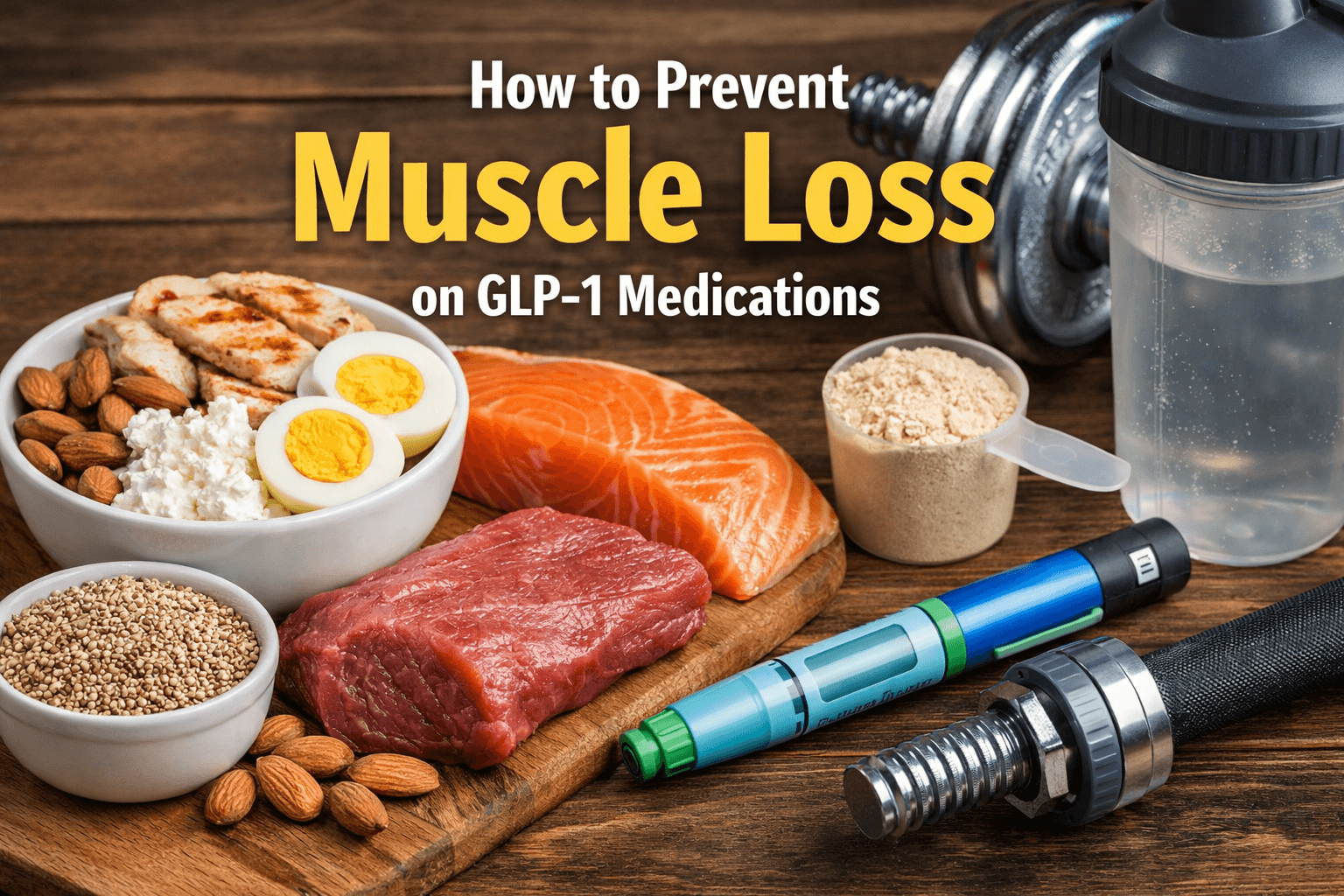
Introduction: Why Muscle Loss Can Happen During Rapid Weight Loss
When weight comes off quickly, the body does not always draw from fat alone. It can also break down muscle tissue for energy. This is one of the most important issues to understanding how to prevent muscle loss on GLP-1 medications. It critical for protecting lean mass during rapid weight loss.
GLP-1 medications reduce appetite significantly. They work by slowing digestion and affecting hunger signals in the brain, which is why they are effective tools for weight loss. According to the Mayo Clinic, medications such as semaglutide reduce appetite and help regulate blood sugar levels.
Knowing how to prevent muscle loss on GLP-1 is not about eating more for the sake of it. It is about eating the right things, in the right amounts, at the right times. That is the foundation of the Fueled Framework approach.
This article explains why lean mass loss happens, how much is normal versus preventable, and what you can do through structured nutrition to protect your muscle during fat loss.
Why Muscle Loss Happens on GLP-1 Medications
GLP-1 medications work by slowing digestion, reducing hunger signals, and helping regulate blood sugar. They are effective tools. But they also create conditions that can lead to muscle loss if nutrition is not managed carefully.
Here is what typically happens. Appetite drops sharply. Food intake falls. Calories are reduced, often by a large amount. When calorie intake drops too fast without enough protein, the body enters a catabolic state. That means it breaks down muscle tissue along with fat.
This is not a flaw in the medication. It is a metabolic response to undereating. The solution is not to eat more calories than needed. The solution is to make sure protein is prioritized within whatever food you are eating.
Muscle loss on semaglutide and similar medications has been documented in clinical research. Some studies show that a meaningful percentage of weight lost on GLP-1 medications comes from lean mass, not fat. The exact amount varies by person, but the risk is real and worth addressing through nutrition.
Muscle protection starts with a structured GLP-1 meal plan that prioritizes protein and controlled energy intake.
How Much Muscle Loss Is Normal vs. Preventable
What the research shows
During any period of weight loss, some lean mass loss is expected. This is true regardless of the method. The body does not shed fat perfectly in isolation.
In general, a well-structured weight loss plan aims to lose no more than 20 to 25 percent of total weight lost from lean mass. Ideally, the goal is closer to 10 to 15 percent. The rest should come from fat.
Without deliberate nutrition strategies, lean mass loss during GLP-1-assisted weight loss can climb higher than this. Some estimates suggest it could account for 25 to 40 percent of total weight lost when protein intake and resistance training are not prioritized.
What you can influence
The good news is that lean mass loss during weight loss is highly responsive to nutrition and exercise. The two most effective tools are adequate protein intake and regular resistance training.
You cannot completely prevent all lean mass loss during a calorie deficit. But with the right structure, you can protect the majority of your muscle mass while still losing fat effectively.
The Protein Threshold Rule
Protein is the most important nutrient for protecting muscle during weight loss. Without enough of it, the body cannot maintain lean tissue even if you are doing everything else right.
A simple formula to use
A practical starting point for protein intake on GLP-1 is to consume at least 0.7 to 1.0 grams of protein per pound of your goal body weight each day.
For example:
- If your goal weight is 160 pounds, aim for 112 to 160 grams of protein per day.
- If your goal weight is 180 pounds, aim for 126 to 180 grams of protein per day.
- If your goal weight is 200 pounds, aim for 140 to 200 grams of protein per day.
This range gives your body what it needs to repair and maintain muscle tissue, even in a calorie deficit.
Note: If you have kidney disease or other medical conditions that affect protein metabolism, speak with your healthcare provider before adjusting your protein intake.
Why protein needs are higher during weight loss
When you are in a calorie deficit, your body is under metabolic stress. Protein requirements go up during this time, not down. The body uses protein not just for muscle repair but also for immune function, hormone production, and energy.
GLP-1 medications reduce the total volume of food you eat. That makes it easy to fall short on protein without realizing it. Tracking intake, even loosely, helps ensure the threshold is being met consistently.
Why Resistance Training Matters
Nutrition alone is not enough to fully protect muscle during weight loss. Resistance training sends a direct signal to the body that lean tissue is needed and should be preserved.
When you lift weights or use resistance, the muscles experience stress. The body responds by working to maintain and rebuild that tissue. This process, called muscle protein synthesis, requires adequate protein to complete. That is why nutrition and training work together.
How often is enough
Two to three resistance training sessions per week is a reasonable starting point for most people. The sessions do not need to be long or intense. Consistent effort over time matters more than any single workout.
If you are new to resistance training, bodyweight exercises and light weights are a solid starting point. As strength builds, gradually increasing the challenge helps maintain progress.
What counts as resistance training
- Free weights such as dumbbells or barbells
- Weight machines at a gym
- Resistance bands
- Bodyweight exercises such as squats, push-ups, and lunges
Walking and cardio are valuable for overall health but do not provide the same muscle-preserving stimulus as resistance training. Both can coexist in a well-rounded routine.
Speak with your healthcare provider before starting a new exercise program, especially if you have any musculoskeletal conditions or are managing a chronic health issue.
The muscle protection strategy can be broken into three core layers.
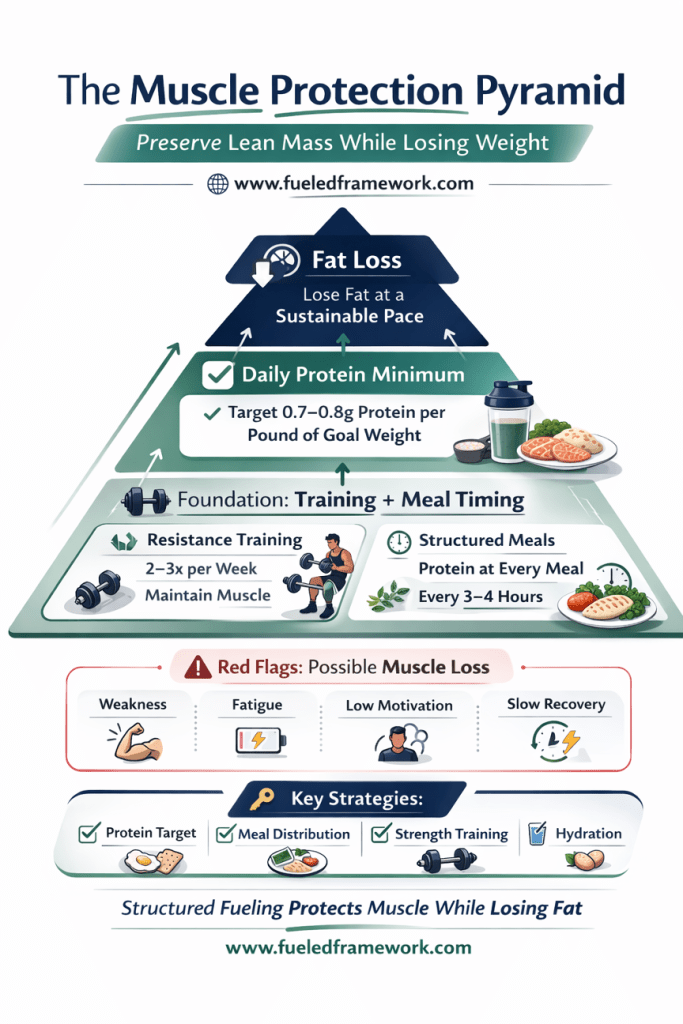
“The base supports everything.
Protein protects lean mass.
Fat loss should remain steady and controlled.”
How to Structure Meals to Protect Muscle
Meal structure plays a meaningful role in how well the body uses protein. Eating protein consistently across the day is more effective for muscle maintenance than consuming it all in one or two meals.
Protein-first eating
At every meal, prioritize protein before anything else. This is especially important when appetite is low. If you only have room for a small amount of food, protein should take up the majority of it.
When appetite is suppressed by GLP-1 medication, it is easy to fill up on easy-to-eat foods like crackers, bread, or fruit. These have a place in a balanced diet, but they do not protect muscle the way protein does.
Spreading protein across meals
Research on protein distribution suggests that spreading intake across three to four meals produces better muscle protein synthesis than concentrating protein in one large meal. The body can only use a certain amount of protein at one time for muscle repair.
A practical approach looks like this:
- Breakfast: 25 to 40 grams of protein
- Lunch: 25 to 40 grams of protein
- Dinner: 30 to 45 grams of protein
- Optional snack: 15 to 25 grams of protein if needed
Good protein sources to focus on
- Chicken breast, turkey, or lean ground meat
- Fish and seafood
- Eggs and egg whites
- Greek yogurt and cottage cheese
- Lean beef
- Protein shakes or powders when whole food intake is limited
Protein shakes can be particularly useful when appetite is very low. They provide protein in a low-volume, easy-to-consume format.
Meal timing around training
Eating a protein-containing meal or snack within one to two hours before or after a resistance training session supports muscle recovery. This does not need to be a large meal. Even 20 to 30 grams of protein is effective.
Signs You May Be Losing Lean Mass
Lean mass loss during weight loss is not always visible on the scale. In fact, the scale alone is a poor tool for tracking body composition. These signs may indicate that muscle, not just fat, is being lost.
Physical signs
- Increasing weakness or fatigue during activities that felt manageable before
- Noticeable loss of strength in exercises you were previously able to perform
- Looking “soft” or less defined even as the scale goes down
- Muscle soreness that takes longer than usual to resolve
Metabolic signs
- Energy levels that feel consistently low, even when sleeping well
- Feeling cold more often than usual
- Slowed progress in fat loss even with consistent calorie intake
These signs are not definitive on their own. They can have multiple causes. But if you notice several of them together, it is worth reviewing your protein intake, training habits, and total calorie consumption.
A DEXA scan or body composition assessment can give you a more accurate picture of lean mass versus fat mass over time. Speak with your healthcare provider if you are concerned about lean mass loss during your weight loss journey.
Summary: Structured Fueling Protects Muscle and Metabolism
Preventing muscle loss on GLP-1 requires more than reducing calories. It requires a structured approach to nutrition that keeps protein intake high, distributes meals consistently throughout the day, and supports lean tissue through resistance training.
The core principles are straightforward. Eat enough protein to meet your daily threshold. Prioritize protein at every meal. Train with resistance two to three times per week. Pay attention to signs that lean mass may be dropping faster than expected.
GLP-1 medications are a useful tool for fat loss. Nutrition structure is what determines whether the weight lost comes primarily from fat or from both fat and muscle. The Fueled Framework system is built around protecting lean mass while supporting sustainable fat loss.
When these principles are applied consistently, the result is not just a lower number on the scale. It is a leaner, stronger, more metabolically efficient body.
Muscle protection starts with a structured GLP-1 meal plan, which ensures protein intake stays high even when appetite is reduced.
2 thoughts on “How to Prevent Muscle Loss on GLP-1”